Custom BLDC Motor — Tweaks To Standard SKU WhatsApp: +86 18268661068
Modifications To Standard SKU

Custom BLDC Motor — Tweaks To A Standard SKU On Existing Tooling.

Custom is the engagement model for customers who need one or two changes from a Shenghe standard SKU — a different shaft length, a different mounting flange, a different voltage tap, a different encoder line count, a different connector pinout, a different IP rating — but don't need a clean-sheet ODM design. The economic differentiator is the tooling boundary: Custom uses existing CNC programs, existing winding fixtures and existing housing tooling with the modification recipe applied at production-line stations, so there's no NRE tooling charge and lead time stays under 8 weeks for the first order. ODM, by contrast, cuts new tooling — housing moulds, winding tooling, custom magnet tooling — and the lead time stretches to 12–20 weeks with a tooling investment to amortise. If your application sits inside the existing tooling envelope on three or fewer parameters, Custom delivers what you need at OEM-adjacent timeline and cost; if the application needs three-or-more parameters outside the envelope or a clean-sheet electromagnetic design, the engineering review at quote stage will reframe the project as ODM with no wasted tooling cost.

No tooling NRE on standard modifications — uses existing CNC, winding, assembly tooling Engineering feasibility note in 5 working days — Custom-vs-ODM call before sample Sample 2–3 weeks, first order 6–8 weeks — between OEM (4–6w) and ODM (12–20w) Modification recipe on the production traveler — repeat orders MOQ 50–100u, 4–5w lead time
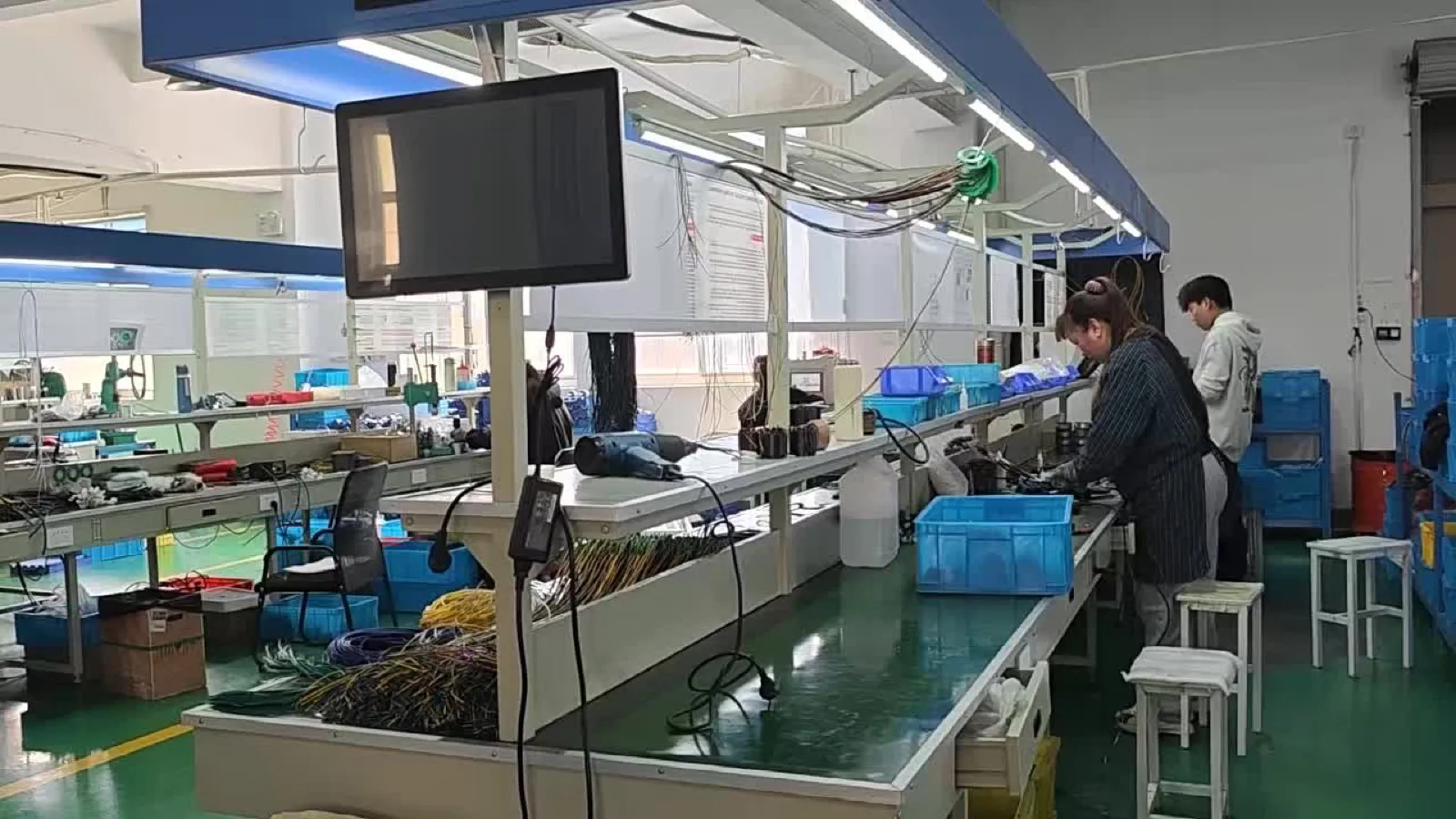
Shenghe BLDC motor assembly line where Custom modifications are baked into the production traveler
For Engineering Teams Whose Application Needs Tweaks, Not A Clean Sheet

One Or Two Parameter Changes On An Existing SKU.

Most industrial customers don't need a clean-sheet motor design — they need a Shenghe standard SKU with one or two parameter changes that line up with their machine. The shaft is 2mm longer than stock to fit a custom coupling. The flange has a different bolt circle to match the existing gear-reducer mount. The voltage tap shifts from 48V to 36V because the customer's battery system runs at 36V. The encoder is a different line count to match the customer's drive. Each of these is a one-or-two-week modification on existing tooling — not a 12–20-week ODM project with new tooling and a 500–1,000 unit MOQ. Custom is the engagement model that makes those tweaks economically viable for procurement teams ordering 100–300 units, with the modification recipe locked on the production traveler so repeat orders stay consistent.

  • Tweaks to standard SKU on existing tooling — no NRE tooling charge for the standard modification list
  • Engineering feasibility note in 5 working days — Custom-vs-ODM call locked before sample build
  • Bilateral NDA on first inquiry — modification spec retained on access-controlled servers
  • Modification recipe baked into the production traveler — repeat orders MOQ 50–100, 4–5 week lead
Decision Tree — Is Custom Right For Me?

Three Questions That Pick The Right Engagement Model.

Customers comparing OEM, Custom and ODM at quote stage usually pick the wrong model on the first inquiry — either over-engineering (asking for ODM when Custom would deliver) or under-engineering (asking for Custom when the modification list genuinely needs ODM tooling). The decision tree below is the same one Shenghe engineering uses at the feasibility review stage. Run through it before sending the inquiry — you'll get a tighter quote and a faster engagement.

  1. Q1: Does my application work with a Shenghe standard SKU as-is, only needing my brand on the housing?
    → Yes: Use OEM (/oem-bldc-motor/) — your brand on our standard SKU, no electrical or mechanical change. First order 4–6 weeks, MOQ 100–500 units.
    → No, my application needs at least one parameter change beyond branding: continue to Q2.
  2. Q2: Do my parameter changes (shaft, flange, voltage, winding, encoder, connector, IP rating) fit inside the existing tooling envelope of a closely-matching standard SKU?
    → Yes: Use Custom (this page) — modifications applied on existing CNC programs, winding fixtures, assembly stations. First order 6–8 weeks, MOQ 100–300 units. No NRE tooling charge for standard modifications.
    → Unsure: send the modification list to the inline RFQ and engineering returns a feasibility note in 5 working days that says "Custom feasible" or "reframe as ODM" with the reason.
    → No, I need new tooling: continue to Q3.
  3. Q3: Do my changes need a clean-sheet design — different magnet grade, different rotor geometry, different frame size, different power class beyond the existing envelope, or genuinely new housing / winding / magnet tooling?
    → Yes: Use ODM (/odm-bldc-motor/) — engineering designs from your application requirements, new tooling cut, in-house FEA + dyno bench qualification. First order 12–20 weeks, MOQ 500–1,000 units. Tooling investment shared customer / Shenghe at concept-design stage.

Boundary cases (e.g., 2 modifications fit existing tooling but the 3rd needs a small fixture): engineering returns a "Custom feasible with minor fixture" note with the small tooling fee and the additional 1–2 week lead time stated. Customer can accept the fee and stay Custom, or relax the 3rd modification to fit existing tooling without the fixture, or accept the ODM reframe — all three options on the table at engineering review stage before sample is built.

OEM vs Custom vs ODM

Pick The Engagement Model At Engineering Review, Not At PO.

Three engagement models on a continuum from "your brand on our standard SKU" through "tweaks to our standard SKU on existing tooling" to "designed from scratch from your application requirements". The differentiation isn't language — it's the tooling boundary, the lead time, the MOQ and the IP arrangement. Pick the right one upfront and the engagement runs cleanly; pick the wrong one and the project either over-pays for ODM tooling that wasn't needed or under-scopes a Custom that should have been ODM.

DimensionOEMCustom (this page)ODM
What the customer brings Brand artwork only — uses Shenghe standard SKU as-is Standard SKU reference + 1–3 parameter modifications on existing tooling Application requirements only (envelope, duty, voltage, torque target)
What Shenghe brings Standard SKU + branded production Standard SKU + modifications applied on existing tooling + production Full motor design + new tooling + production
Tooling envelope Existing — no change Existing — modifications fit within the existing CNC / winding / housing tooling New — housing mould, winding tooling, possibly custom magnet tooling cut for the project
Sample lead time 2–3 weeks (branded sample) 2–3 weeks (modification on existing tooling) 4–6 weeks (first prototype after design freeze)
First production order lead 4–6 weeks 6–8 weeks 12–20 weeks (requirements + concept + prototype + tooling + production)
Repeat order lead 3–4 weeks 4–5 weeks (against locked modification recipe) 4–6 weeks (against locked tooling)
MOQ first run 100–500 units per SKU 100–300 units per SKU 500–1,000 units per SKU
MOQ repeat run 100–300 units per SKU 50–100 units against locked modification recipe 100–300 units against locked tooling
Tooling investment None — uses standard SKU None for standard modifications; small fixture fee for complex flange / shaft geometry Yes — housing mould, shaft fixturing, custom connector over-mould, custom magnet tooling
IP arrangement Customer owns the brand; Shenghe owns the design Shenghe owns the base SKU; customer owns modification-specific IP Customer owns the new motor design IP; Shenghe owns the manufacturing know-how
Best for Brand customers selling standard motors under their own brand Customers needing minor spec changes that fit existing tooling — shaft, flange, voltage tap, encoder, connector, IP Engineering-led customers with no off-shelf SKU that fits — robotics, AGV, medical, aerospace

Existing motor design needing branded production? See OEM BLDC Motor →. Need a clean-sheet design from your application requirements? See ODM BLDC Motor →. Unsure which fits? Send the spec to the inline RFQ and engineering returns the right-model recommendation inside 5 working days.

Customisable Parameters On Existing Tooling

What Custom Can Change Without Cutting New Tooling.

Each parameter below has a defined scope of "what's changeable on existing tooling" vs "what needs ODM". The boundary is published, not negotiated case-by-case — engineering uses the same boundary at the feasibility review stage, so the answer is consistent across customers and projects.

ParameterCustom-scope (existing tooling)ODM-scope (new tooling needed)Lead-time impact
Shaft length, diameter, keyway, flat, splined, D-shaft Any geometry within the existing CNC lathe envelope (max length per frame, max diameter per chuck) Hollow-shaft, shaft step geometry beyond existing CNC sub-program range +1–2 weeks (custom shaft program loaded into existing CNC)
Mounting flange dimensions, bolt pattern, face mount Custom dimensions on the existing housing using existing turning fixtures (or with a small new fixture) Custom housing mould with integrated flange profile +1–2 weeks (existing fixture); +2–3 weeks (small new fixture)
Voltage tap on existing winding Voltage adjusted within the existing wire-gauge envelope by changing turns count on existing winding fixture (e.g., 48V → 36V on the same frame) Voltage outside existing wire-gauge range (needs new winding tooling) +1–2 weeks (existing fixture parameter change)
Winding spec — turns, slot fill Turns count adjustment within existing wire-gauge envelope; slot fill within existing tooling capability Different wire gauge requiring new winding fixture; slot fill outside existing tooling capability +1–2 weeks (existing fixture)
Encoder integration Different line count (e.g., 1000 ppr → 2500 ppr), different signal type (TTL vs differential), different connector pinout — on motors with existing encoder mount on rear housing Adding encoder mount to a frame that doesn't have one (needs housing tooling change); absolute encoder integration on a frame designed for incremental only +1 week (existing encoder mount)
Connector family and pinout Any connector family from common stock (JST / Molex / AMP / MIL-spec) with custom pinout; custom cable length and over-mould Connector family requiring new over-mould tooling +1 week
IP rating IP54 (standard) → IP65 with confirmed gasket and shaft seal upgrade on existing housing IP67 with submerged-grade sealing; specific lab-certified IP rating beyond IP65 (needs new sealing tooling and validation) +1–2 weeks (IP65 upgrade)
Housing colour Custom RAL within the standard paint range; custom carton labelling and country-of-origin marking Custom paint outside standard range (needs additional paint qualification) +1 week
Frame size No change — pick the closest standard frame Custom frame dimensions beyond standard envelope (needs custom housing mould)
Magnet grade or geometry No change — uses standard magnet Custom magnet grade (e.g., higher-energy NdFeB, SmCo for high-temperature) or custom geometry — needs new magnet tooling

Total lead-time impact for Custom is the sum of the modification rows applied — a project with custom shaft (+1.5w) + custom flange (+1.5w) + custom encoder (+1w) lands at the 6–8 week first-order band. Projects that exceed 8 weeks because too many modifications are stacked usually reframe better as ODM. Engineering review surfaces this at quote stage.

Customer Profiles — Who Uses Custom

Six Procurement Patterns Where Custom Is The Right Fit.

Generic descriptors of the customer profiles Shenghe runs Custom projects with. Reference customer list available under NDA on request — no anonymous claims, no invented logos.

Industrial OEMs Replacing An Incumbent Motor

Industrial OEMs replacing an existing motor (often a brushed DC or AC induction motor at end-of-life) with a BLDC equivalent that needs to drop into the existing machine envelope. Typical brief: match the existing motor's mounting flange and shaft dimensions exactly so the rest of the machine stays untouched, but otherwise pick the closest Shenghe BLDC frame for the application's voltage and power. Custom shaft + custom flange combination is the most common modification pair.

AGV Builders With Specific Drive-Coupling Requirements

AGV system builders sourcing traction or steer motors that need to mate with the AGV's existing drive coupling — a particular shaft diameter, a particular keyway position, a specific flange bolt pattern. Custom modification typically covers shaft + flange + encoder line count to match the AGV's path-planning controller. Base SKU is usually a 24V/250W or 48V/750W BLDC with planetary gearbox; modifications applied on the gearbox output shaft side.

E-Mobility Brands Standardising Across A Vehicle Platform

E-mobility brands (e-bike, e-scooter, e-rickshaw) sourcing motors across multiple vehicle SKUs that share a common voltage and power class but need motor-specific details — different connector to match each vehicle's wiring harness, different cable length to fit each vehicle's frame routing, different encoder pinout to match each vehicle's display protocol. Modifications kept light to amortise the modification recipe across the platform's volume.

Automation Integrators With Drive-Side Compatibility Constraints

Automation integrators sourcing motors that must mate with the customer's existing drive (servo controller, VFD, motion controller) — needing a specific encoder line count, a specific Hall-sensor signal type, a specific connector pinout to plug into the existing harness. Custom modification covers encoder + connector typically; voltage tap may also adjust to match the customer's DC bus.

Medical / Lab Equipment OEMs Needing IP Rating Upgrade

Medical, lab and instrumentation OEMs whose application sits in a wash-down or splash-prone environment, needing the BLDC motor to step up from standard IP54 to IP65 sealing. Custom modification covers gasket and shaft seal upgrade on the existing housing, validated under the customer's wash-down chemistry. For IP67 submerged-grade sealing the engagement reframes as ODM.

Pump / Fan / HVAC Manufacturers With Voltage Tap Adjustments

Pump, fan and HVAC manufacturers sourcing BLDC motors across markets with different battery / DC bus standards (48V in one market, 36V in another, 24V in a third). Custom modification adjusts the voltage tap on the existing winding tooling to match each market — same frame, same gearbox, same controller pairing, just different turns count for each voltage. Most common single-parameter Custom project.

Profiles above are descriptive — Shenghe does not name customers without written consent. Reference customer list available under NDA on request.

6-Step Custom Workflow

From Modification List To Repeat Production.

The standard Custom project path Shenghe runs with engineering and procurement teams. Each step has a defined deliverable, response window and gate before the next step starts.

  1. Step 1 — Send the modification list with base SKU reference. Identify the closest Shenghe standard SKU from /products/bldc-motor/ Hub. List the modifications: custom shaft (length, diameter, keyway, flat, splined, D-shaft), custom mounting flange dimensions and bolt pattern, custom voltage tap, custom winding adjustment, custom encoder integration (line count, signal type), custom connector and pinout, custom cable length and over-mould, custom IP rating up to IP65, custom housing colour. The more specific the modification, the tighter the engineering feasibility note.
  2. Step 2 — Engineering feasibility review (5 working days). Engineering returns one of three outcomes: (a) "Custom feasible" with lead time / MOQ / pricing; (b) "Custom feasible with minor fixture" with the small tooling fee and additional lead time stated; (c) "reframe as ODM" with the ODM lead time / MOQ / pricing — customer can relax the modification to stay Custom or accept the ODM reframe.
  3. Step 3 — Sample build on existing tooling (2–3 weeks). Sample manufactured on the existing production line with the modification recipe applied. CNC machining loads custom shaft / flange programs; winding line applies custom voltage tap; assembly station integrates custom encoder / connector / IP-rating sealing; end-of-line dyno test runs standard QA + modification-specific checks. Sample shipped DHL / FedEx with dyno test record.
  4. Step 4 — Customer validation (1 week typical). Customer integrates sample into their machine and validates against the actual application — shaft fit in coupling, flange fit on mounting interface, encoder behaviour with drive, IP performance under environmental envelope. Validation shorter than ODM since base SKU's electromagnetic and thermal behaviour is already known. Revision loops 1–2 weeks each.
  5. Step 5 — First production order with modification recipe (3–4 weeks). Once sample approved, customer issues PO. Modification recipe baked into production traveler — each motor on the line receives the same modifications. Per-unit end-of-line dyno test record includes modification-specific QA. Documentation pack: ISO 9001 / CE / RoHS DoC on customer letterhead, modification spec sheet attached, traceability lot record.
  6. Step 6 — Repeat orders against the locked modification recipe (4–5 week lead, MOQ 50–100u). Repeat orders pull the locked modification recipe from the production traveler, so CNC sub-program is already validated, winding fixture parameters are already locked, and assembly QA is already running. Most Custom customers run 60–90 day reorder cycles. Volume buyers shift to wholesale tier pricing once volume builds — see /bldc-motor-wholesale/ for tier structure.
IP Arrangement & Custom Agreement

Who Owns The Base SKU vs The Modification.

The IP split on Custom is cleaner than ODM because the base SKU is Shenghe's existing design — only the modification-specific IP belongs to the customer. The agreement spells out the boundary so neither side overreaches.

Shenghe Owns The Base SKU Design

Standard Custom contract: Shenghe owns the base SKU design — the standard motor that the modifications are applied to. Drawings, BOM, electrical spec at the standard configuration, manufacturing tooling, controller firmware all stay Shenghe IP. The base SKU continues to ship in Shenghe's standard catalog under the standard SKU code.

Customer Owns The Modification IP

The customer owns modification-specific IP: custom shaft drawing, custom flange drawing, custom voltage tap parameters, custom encoder integration spec, custom connector pinout, customer-side patents arising from the modification's application in the customer's machine. Locked in writing in the Custom agreement before sample is built.

NDA On First Inquiry — Bilateral

Bilateral NDA supported on first inquiry. Customer modification list, application context and any drawings retained on access-controlled internal servers; engineering review participants under role-based access; no sharing with other customers; no use for Shenghe marketing without written permission. NDA signs before any modification list is shared if procurement policy requires it.

No Resale Of The Specific Modification Combination

Shenghe does not sell the customer's specific modification combination to third parties (the modified SKU does not appear in the standard Shenghe catalog under the same modification recipe). The underlying modification capability ("custom shaft length on stock 90BL frame") is the factory's manufacturing know-how and may be applied to a different customer's project at that customer's own request — but the customer's specific drawing pack stays with the customer.

Repeat Orders Stay With The Same Recipe

Once the modification recipe is locked on the production traveler, repeat orders run against the same recipe — no drift between batches, no surprise redesign. If the customer wants to change a modification on a follow-on order, it goes back through engineering review (Step 1 of the workflow) to verify the new modification still fits Custom scope vs reframing as ODM.

Brand Treatment Per OEM Rules

Branded packaging, customer logo on housing, customer-letterhead datasheet, drop-ship under customer brand to end customer — all the OEM workflow elements are available on Custom orders. See /oem-bldc-motor/ for the branded-shipment workflow detail. Most Custom customers run branded production from day one.

Download The Custom BLDC Motor Capability Brochure (PDF) Customisable parameter table (shaft / flange / voltage / winding / encoder / connector / IP / colour with Custom-scope vs ODM-scope boundary published), 6-step Custom workflow, OEM vs Custom vs ODM comparison, modification-recipe production-traveler workflow, Custom agreement template summary, MOQ and lead-time matrix, payment terms, base SKU reference list. Sent to your email by the export desk.
Download PDF
Inline Custom RFQ

Send The Modification List — Engineering Feasibility In 5 Working Days.

Tell the export desk: closest base SKU from the BLDC catalog (or motor specs if you don't have an SKU yet — voltage, power, frame), modification list (shaft / flange / voltage / winding / encoder / connector / IP / colour), target quantity for first order, target annual volume, branding requirement, payment-term preference. Engineering returns a feasibility note inside 5 working days that says either "Custom feasible" with lead time / MOQ / pricing, "Custom feasible with minor fixture" with tooling fee, or "reframe as ODM" with the reason. Bilateral NDA on request before any modification list is shared.

  • Bilateral NDA on first inquiry — modification spec retained on access-controlled servers
  • Sample 2–3 weeks; first production order 6–8 weeks; repeat orders 4–5 weeks against locked recipe
  • MOQ 100–300 units first run; 50–100 units repeat against locked modification recipe
  • No tooling NRE for standard modifications; small fixture / jig fee on complex flange or shaft step geometry
  • Direct factory in Cixi, Ningbo — same production line as stock and OEM, modification recipe baked into production traveler
Request Quote

Custom Modification Inquiry — Base SKU + Tweak List.

Closest Shenghe base SKU, modification list (shaft / flange / voltage / winding / encoder / connector / IP / colour), target quantity, annual forecast, branding and payment-term preference — anything you can share helps engineering reply faster with either acceptance, fixture-fee note, or ODM reframe.

WhatsApp
Custom BLDC Motor FAQ

What Engineering And Procurement Teams Ask Before The First Modification List.

The eight questions engineering and procurement teams ask most often before sending the first Custom modification list. For project-specific questions not covered here, send the inquiry — engineering replies inside 5 working days on standard-scope feasibility.

What's the difference between Custom, OEM and ODM?

OEM = your brand on Shenghe's standard SKU, no electrical or mechanical change (4–6w first order). Custom = standard SKU + 1–3 parameter modifications using existing tooling (6–8w first order, MOQ 100–300). ODM = clean-sheet design from your application requirements with new tooling (12–20w first order, MOQ 500–1,000). Tooling boundary picks the engagement model.

Which modifications fit Custom (vs ODM)?

Custom-scope: shaft (length / diameter / keyway / flat / splined / D-shaft within CNC envelope), flange dimensions, voltage tap on existing winding, turns adjustment within wire-gauge, encoder line count / signal type / pinout, connector family / pinout / cable, IP54 → IP65 upgrade, housing colour. ODM-scope: custom housing dimensions / mould, custom magnet grade / geometry, custom frame size, IP67 submerged. Engineering review surfaces the boundary.

How long does a Custom project take?

6–8 weeks first order: 1w engineering review, 2–3w sample build, 1w customer validation, 3–4w first production batch. Compressed to 4–5w on simple single-modification projects (e.g., just a custom shaft length). Multi-modification projects approaching ODM scope tend toward 8w or get reframed at engineering review.

What's the MOQ and tooling fee?

MOQ 100–300 units first run depending on modification set; 50–100 repeat against locked recipe. No tooling fee for standard modifications (existing tooling). Small fixture / jig fee on complex custom flange or custom shaft step geometry — quoted at engineering review before sample.

How do I know Custom is right for me?

Three-question decision tree: (1) Standard SKU + your brand only? Use OEM. (2) Standard SKU + 1–3 parameter changes that fit existing tooling? Use Custom. (3) Clean-sheet design with new tooling? Use ODM. Boundary is the tooling envelope. Send modification list to inline RFQ — engineering returns "Custom feasible" or "reframe as ODM" inside 5 working days.

Who owns the design IP?

Shenghe owns the base SKU design (standard motor + tooling + controller firmware). Customer owns modification-specific IP (custom shaft drawing, custom flange drawing, custom voltage tap parameters, customer-side patents). Locked in writing in Custom agreement. Bilateral NDA on first inquiry. No resale of customer's specific modification combination to third parties.

What if my modification list grows to ODM scope?

Engineering flags this proactively at the feasibility review (Step 1) before sample is built. Customer can: (a) relax modification to fit existing tooling and stay Custom, (b) accept ODM reframe with new lead time and tooling investment, or (c) decline. ~80% of projects stay Custom; the 20% reframed to ODM are usually projects where the customer underestimated the tooling impact — surfaced before any wasted tooling cost.

What payment terms — T/T, L/C?

T/T 30/70, L/C at sight ≥ USD 30k, PayPal samples. Small fixture / jig fee billed upfront if a fixture is needed. Currency USD on PI; RMB or EUR on request. Volume buyers carry forward to wholesale tier pricing once volume builds — see /bldc-motor-wholesale/.

Custom BLDC motor — feasibility note in 5 working days Send Modification List Custom PDF WhatsApp