Industry Guide — Stamping & Press Shops

Die Transfer Cart: How to Move Dies Safely & Cut Changeover Time

A die transfer cart is a battery-powered low-profile platform that moves stamping dies, injection molds and press tooling between the die storage area and the press — at floor level, without an overhead crane. By rolling dies in and out horizontally, a die cart can cut changeover time from 2–4 hours to 15–30 minutes, directly increasing press utilization and reducing labor cost.

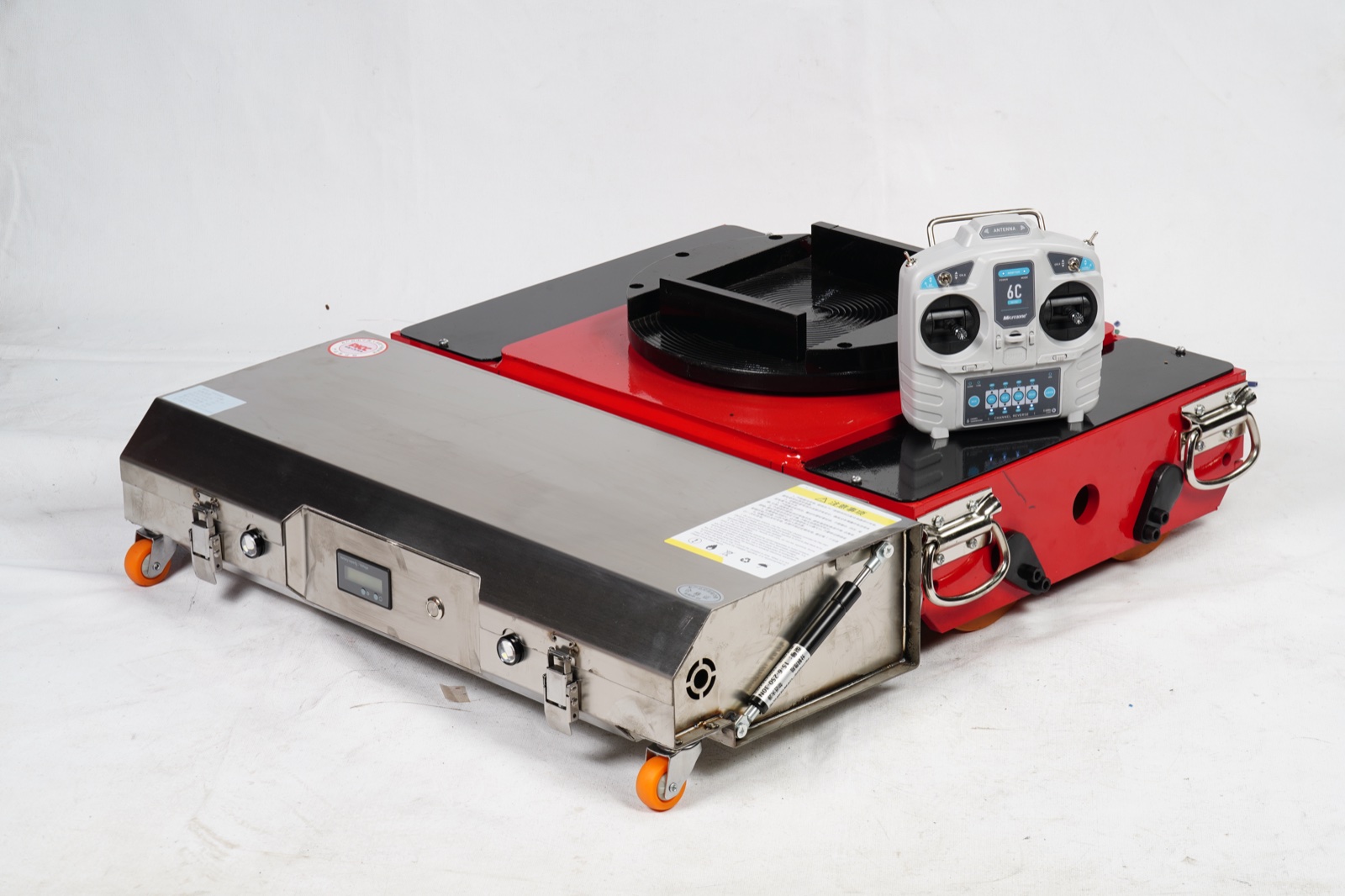
Battery-powered die transfer cart with low-profile chassis, rotating turntable for die reorientation, and industrial wireless remote control
Shenghe STC-series die transfer cart — low-profile battery-powered platform with rotating turntable for die reorientation. Wireless remote lets the operator stand clear of the load during transport.
The Problem

Why Die Changes Take So Long

In a typical stamping plant, a die change on a 500–1000 ton press looks like this:

  1. Wait for the overhead crane (often shared across multiple presses)
  2. Rig and lift the old die out of the press — 15–30 min
  3. Transport the old die to the storage rack — 10–20 min
  4. Fetch and rig the new die from storage — 10–20 min
  5. Lower the new die into the press — 15–30 min
  6. Align, clamp, connect and test — 20–40 min

Total: 1.5–4 hours of press downtime per die change.

For a plant running 3–5 die changes per shift, that’s 4.5–20 hours of lost production time daily. At $200–500/hour press operating cost, the annual loss is $200,000–$2 million per press.
Hidden Costs of Crane-Only Die Changes

  • Crane bottleneck: One crane shared across 5–10 presses means queuing
  • Safety risk: Suspended 20-ton die over workers is the #1 cause of stamping plant fatalities
  • Skilled labor: Certified crane operator + rigger team = 2–3 people per change
  • Floor damage: Crane-dropped dies damage press bolsters (repair cost: $5,000–$50,000)
  • Die damage: Rigging marks, sling scratches and impact dents reduce die life
The Solution

How a Die Transfer Cart Changes the Workflow

A die transfer cart replaces steps 1–4 above with a single horizontal movement:

  1. Pre-stage: Load the next die onto the cart and park it next to the press while the current job is still running (external setup, per SMED methodology)
  2. Unclamp: Release the old die from the press bolster. Disconnect utilities.
  3. Roll out: Drive the cart into position. Slide the old die onto the cart platform via roller table or push/pull mechanism. 5 minutes.
  4. Transport: Drive the old die to storage. Use the turntable to reorient for rack alignment if needed. 3–5 minutes.
  5. Roll in: Drive the pre-staged new die to the press. Slide it onto the bolster. 5 minutes.
  6. Clamp & test: Clamp, connect utilities, run test stroke. 10–15 minutes.

Total: 15–30 minutes. That’s a 75–90% reduction in changeover time.

ROI Calculation

For a plant with one 500-ton press doing 4 die changes per shift, 2 shifts per day:

  • Before cart: 4 changes × 2.5 h × 2 shifts = 20 h downtime/day
  • After cart: 4 changes × 0.4 h × 2 shifts = 3.2 h downtime/day
  • Saved: 16.8 hours/day = $3,360–$8,400/day at $200–$500/h press cost
  • Cart investment: $8,000–$25,000 depending on tonnage
  • Payback period: 1–7 working days
Components

What Makes a Good Die Transfer Cart

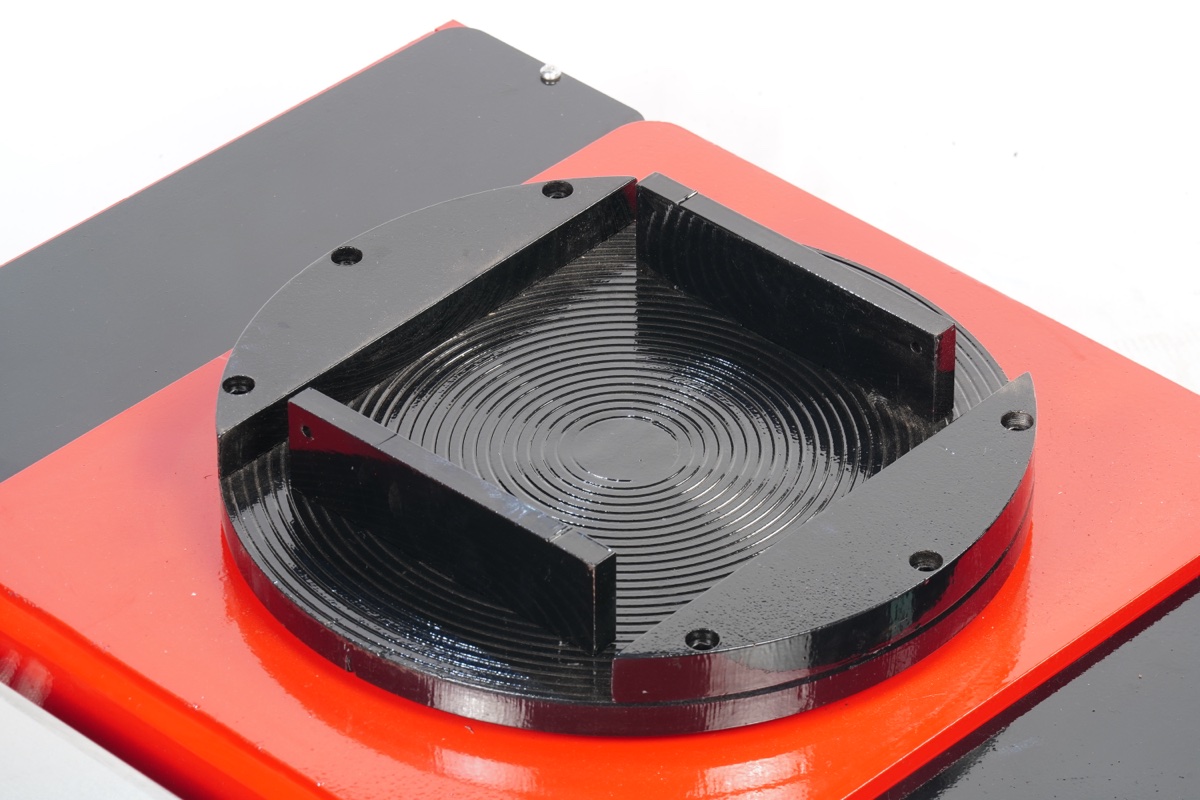
CNC-machined rotating turntable on die transfer cart for die reorientation during changeover

Rotating Turntable

Critical for die shops where the storage rack faces a different direction than the press. The turntable rotates the die 90° or 180° without the operator having to reposition the entire cart. CNC-machined concentric grooves provide load grip under rotation.

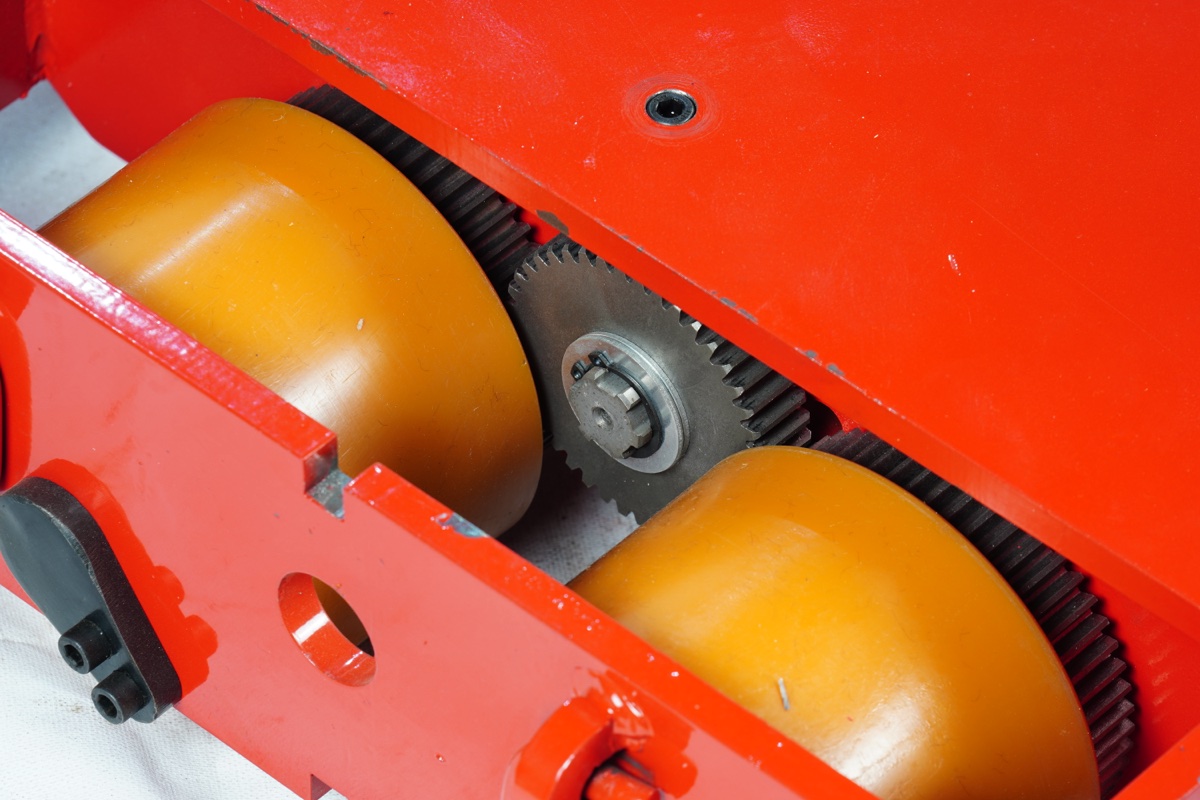
Polyurethane drive wheels inside die transfer cart — gear-driven by dual BLDC servo motors

BLDC Servo Drive

Dual brushless DC servo motors provide the precise, low-speed control needed to inch a 30-ton die into the press pocket. Unlike AC motors, BLDC delivers full torque at near-zero RPM — essential for positioning accuracy. Imported polyurethane wheels grip concrete without marking.

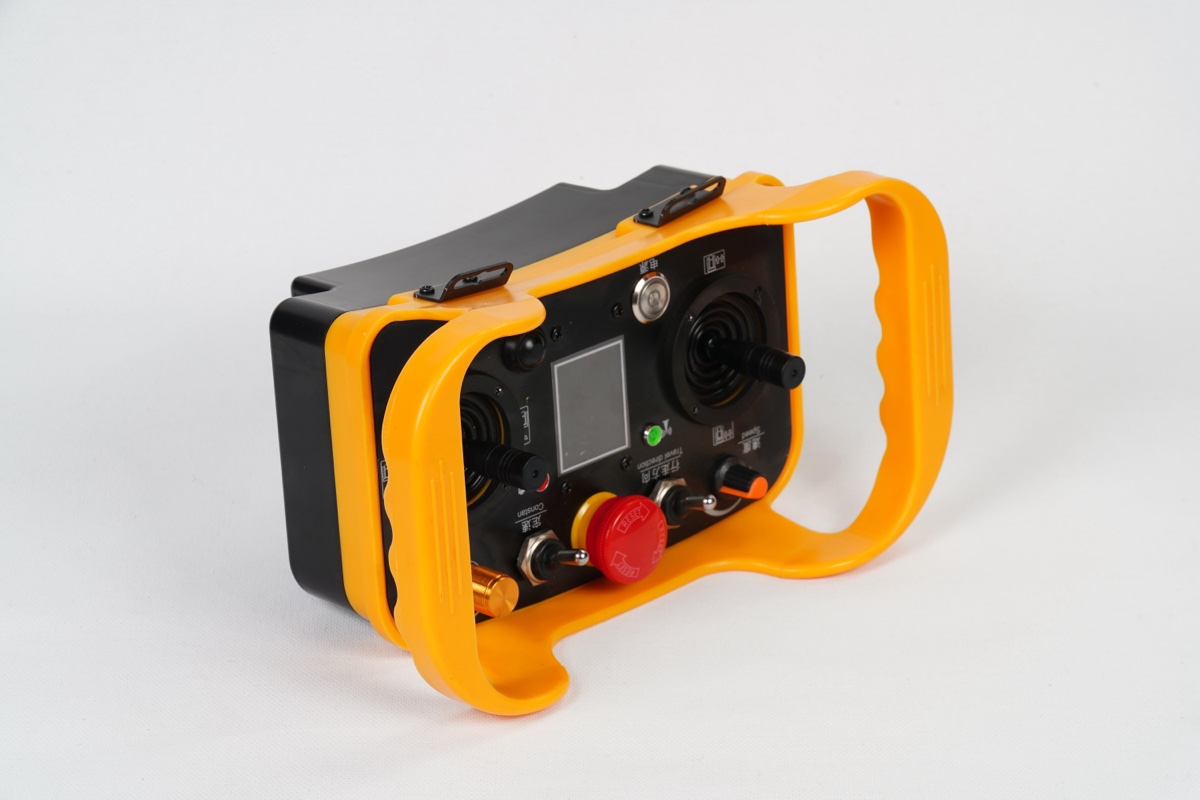
Industrial wireless remote control for die transfer cart — dual joystick with emergency stop

Wireless Remote Control

The operator stands at a safe distance from the press and die during the entire changeover. Dual joysticks control forward/reverse, left/right and turntable rotation. Emergency stop mushroom button provides instant shutdown. Industrial radio link — no line-of-sight required.

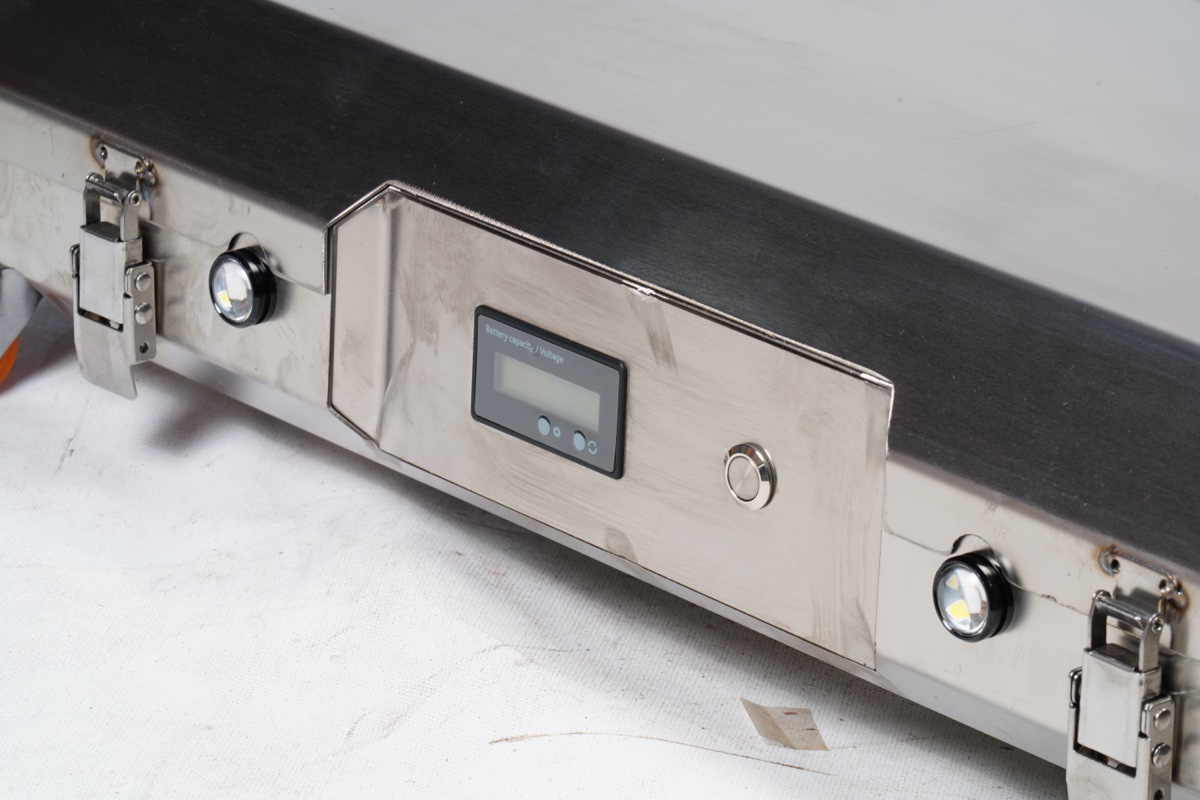
Stainless steel control panel with battery voltage display on die transfer cart

Sealed Electronics

Stamping plants generate metal dust, oil mist and hydraulic fluid splatter. The stainless steel control panel enclosure protects the battery monitor, controller and wiring. LED work lights illuminate the press area during die insertion — essential in poorly lit die pockets.

Specification

How to Size a Die Transfer Cart by Press Tonnage

Die Weight by Press Tonnage (Typical Ranges)

Press Tonnage Typical Die Weight Recommended Cart (1.2× safety) Shenghe Model Drive Power
200–400 ton 5–12 ton 10–15 ton cart STC-10 2×500W BLDC
400–630 ton 12–20 ton 15–25 ton cart STC-20 or STC-25 2×750W or 2×1000W
630–1000 ton 20–35 ton 25–40 ton cart STC-30 or STC-40 2×1000W or 2×1500W
1000–2000 ton 35–50 ton 40–60 ton cart STC-50 or STC-60 2×2000W or 2×3000W
2000+ ton 50–100+ ton Tandem pair: 100–120 ton STC-50+50 or STC-60+60 4×2000W or 4×3000W

Important: Die weight varies widely by die complexity, material (cast iron vs steel), and part geometry. Always confirm the actual die weight from the tooling drawing rather than estimating from press tonnage alone. The 1.2× safety factor accounts for fixtures, bolster plates and alignment hardware that travel with the die.

Decision

Turntable vs Flat Deck: Which Do You Need?

Scenario Turntable Flat Deck
Storage and press face different directionsRequired — rotates die without repositioning cartNot suitable
Die must enter press at specific orientationRequired — rotate on cart before insertionMust pre-orient die before loading
Straight-line path, no reorientationOptional (adds cost)Best choice — simpler, cheaper
Multiple presses served by one cartRecommended — different presses may face different directionsWorkable if all presses align
Price difference~15–20% premium over flat deckBase price
Lean Manufacturing

Die Transfer Carts in SMED / Quick Die Change Systems

SMED (Single-Minute Exchange of Die) is a lean manufacturing methodology that separates die change tasks into “internal” (press must be stopped) and “external” (can be done while press is running). The goal: reduce internal time to under 10 minutes.

A die transfer cart is the physical enabler of external setup:

  • External: Pre-load the next die onto the cart, pre-heat it if needed, verify orientation — all while the press is running the current job
  • Internal: Only the actual die swap (roll out old, roll in new) requires the press to stop — this takes 5–10 minutes with a cart

Without a die cart, pre-staging is impossible because the crane is the only transport method and it blocks the press during the entire change.

Complete QDC System Components

A full quick die change (QDC) system combines:

  • Die transfer cart — horizontal transport (this article)
  • Roller table / die lifter — transfers die between cart and press bolster
  • Hydraulic die clamps — replaces manual bolt clamping (saves 15+ min)
  • Quick-connect utilities — snap-on hydraulic, pneumatic and electrical connections
  • Die pre-heater — brings die to operating temperature before insertion

The die transfer cart is usually the first and most cost-effective QDC component to implement.

Safety

Die Transfer Safety Protocols

Before Each Die Change

  • Verify die weight against cart payload rating — never exceed rated capacity
  • Check battery level — minimum 30% charge before starting a die change
  • Inspect cart wheels for damage, debris buildup or flat spots
  • Clear the travel path of oil, coolant puddles, metal chips and obstructions
  • Confirm emergency stop function on the wireless remote

During Transport

  • Stand clear: Operator should never stand between the cart and any fixed object (press, wall, rack)
  • Low speed: Move at walking pace (<5 m/min) when approaching the press
  • Secure the die: Use die clamps or chocks on the cart platform to prevent shifting during transport
  • Two-person rule: One operates the remote, one acts as spotter at the press end
  • No riding: Never ride on the cart platform or step between cart and press during movement
FAQ

Frequently Asked Questions

What is a die transfer cart?

A die transfer cart is a low-profile, motorized platform used to move stamping dies, injection molds and press tooling between the storage area and the press. It slides the die in and out of the press at floor level, eliminating overhead crane lifts and reducing die changeover time from hours to minutes. Typical payload ranges from 10 to 60 tons for single-unit carts.

How does a die transfer cart reduce changeover time?

Traditional die changes require an overhead crane to lift the old die out, transport it to storage, fetch the new die, and lower it into the press — each lift taking 15–30 minutes with rigging. A die transfer cart rolls the old die out on a low platform, rotates or repositions it, and rolls the new die in at floor level. Total changeover can drop from 2–4 hours to 15–30 minutes, directly increasing press uptime.

What size die transfer cart do I need?

Size the cart at 1.2× your heaviest die weight. A 500-ton stamping press typically has dies weighing 15–25 tons, needing a 25–30 ton cart. A 1000-ton press may have dies up to 40 tons, needing a 50 ton cart. Always confirm the actual die weight from the tooling drawing rather than estimating from press tonnage alone.

Do I need a turntable on a die transfer cart?

A turntable is needed when the die storage area and the press face different directions, or when dies must be rotated 90° or 180° for correct orientation before insertion. If the cart travels in a straight line between storage and press with no reorientation needed, a flat deck is simpler and cheaper.

Die transfer cart vs overhead crane — which is better?

Die transfer carts are faster (15–30 min vs 2–4 hours per change), safer (no suspended load risk), and require less skilled labor (no certified crane operator needed). Overhead cranes are still needed for initial die placement onto the cart or for dies that must be lifted vertically into the press. Many plants use both: the crane for vertical lifts, and the cart for horizontal transport and positioning.

Can a die transfer cart work with a quick die change (QDC) system?

Yes. Die transfer carts are a key component of SMED (Single-Minute Exchange of Die) and quick die change systems. The cart handles horizontal die transport while hydraulic clamping, roller tables and automatic connectors handle the press-side operations. Together, they can reduce die change to under 10 minutes.

Need a Die Transfer Cart Quote?

Tell us your press tonnage, heaviest die weight, travel distance and whether you need a turntable. We’ll recommend the right model and send a budgetary quote. Standard models ship in 5 working days.

Get a Quote WhatsApp