
Electric Transfer Cart: Complete Buying Guide
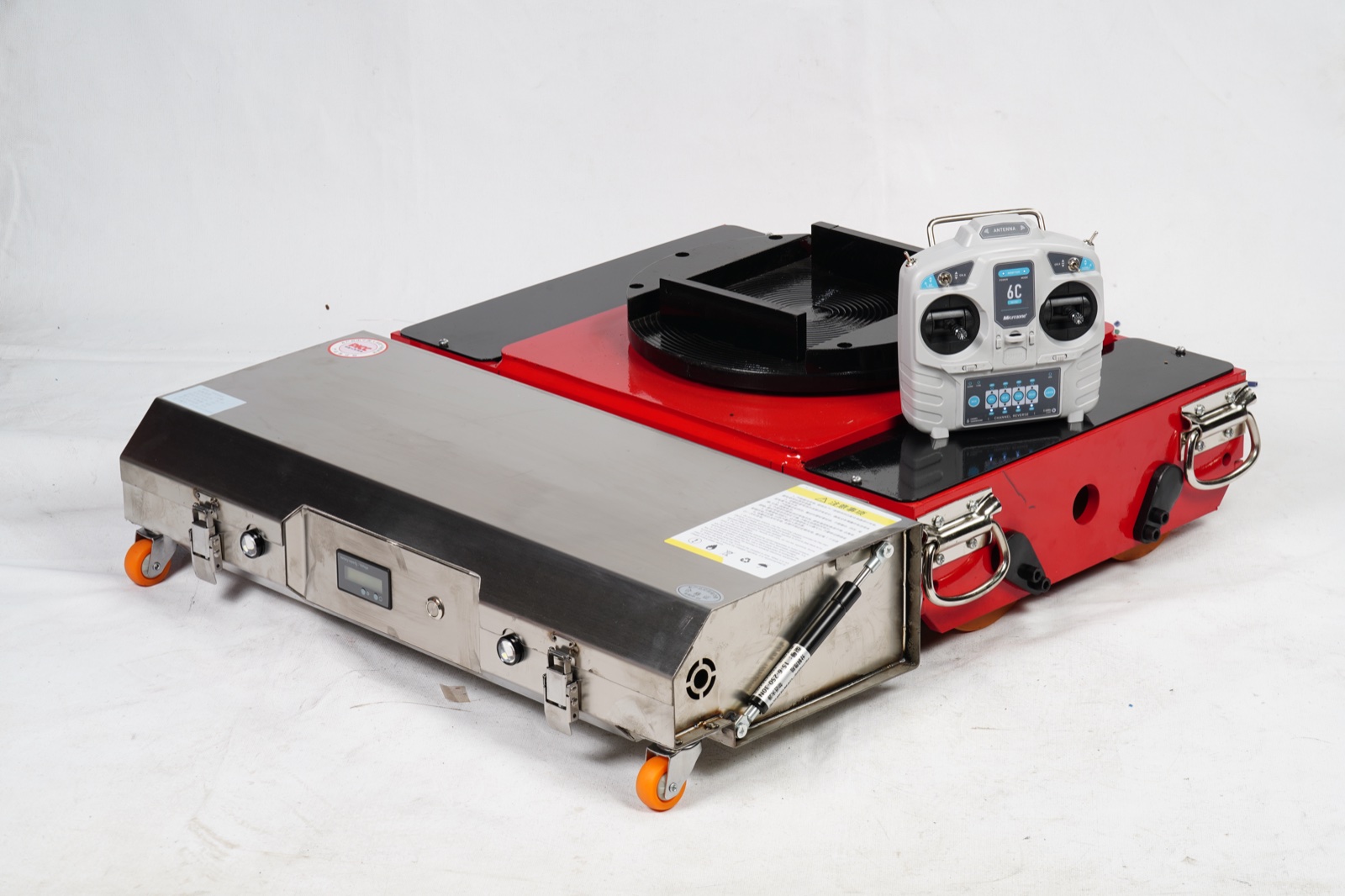
An electric transfer cart (also called a motorized transfer cart, trackless transfer cart, or electric flat cart) is a low-profile, battery-powered or rail-powered vehicle designed to move heavy loads — 5 to 120+ tons — across short distances inside a factory or yard. Unlike a forklift, the load sits directly on the cart’s platform. No counterweight, no driver cab, no lifting forks. This guide covers the types, key components, sizing decisions and industry applications you need to understand before sourcing one.
Fundamentals
1. What Is an Electric Transfer Cart?
An electric transfer cart is a flat, motorized platform that moves heavy or oversized loads horizontally across a factory floor, between production bays, or across an outdoor yard. The industry also calls them electric flat carts, heavy duty transfer trolleys, motorized transfer cars, or heavy duty AGVs (when equipped with navigation).
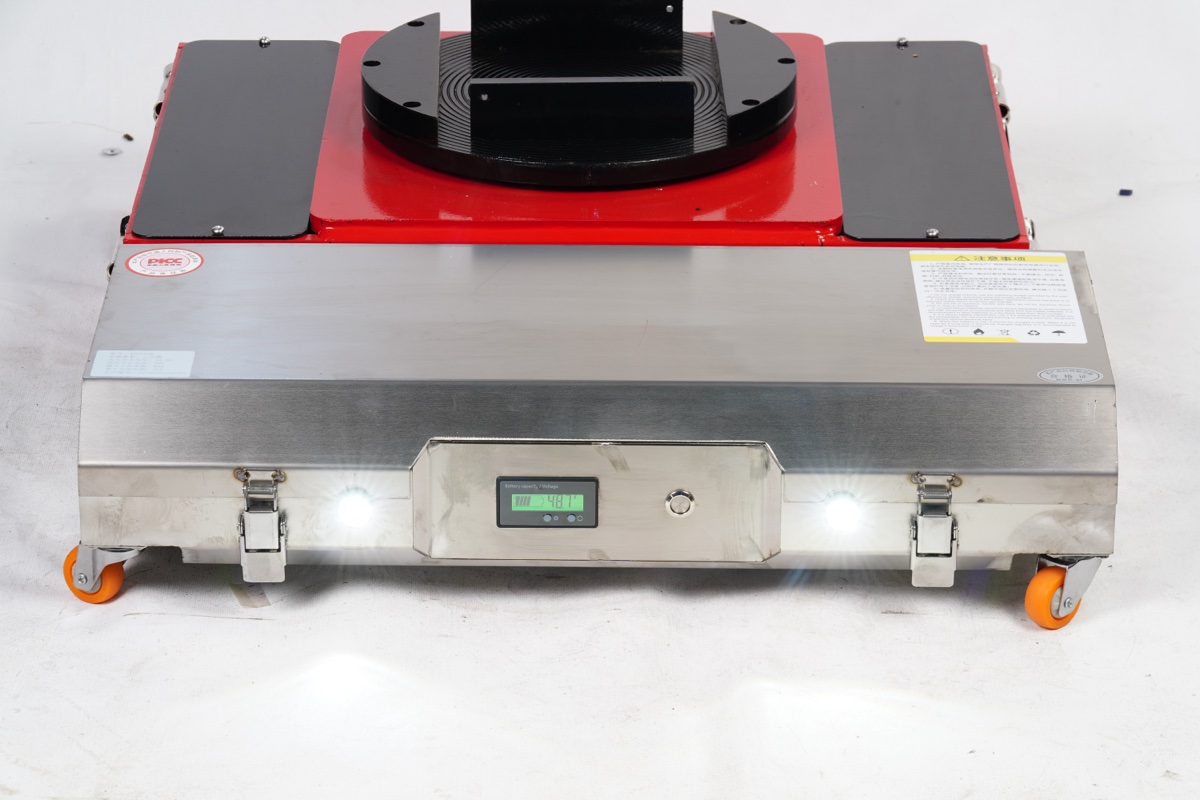
The cart rides on four or more wheels (driven by electric motors) and carries the load on its top surface — either a flat steel deck or a rotating turntable. The operator controls movement via a wireless remote, a wired pendant, or an automated guidance system.
Transfer Cart vs Forklift
A forklift lifts and carries loads on forks using a counterweight. This works for pallets and containers, but becomes impractical above 10–15 tons — the counterweight becomes enormous, the turning radius is huge, and the operator licensing cost escalates. A transfer cart carries the load flat on a low platform, eliminating the tipping risk entirely. It handles 10 to 60+ tons on a single unit, or 100–120 tons in tandem pairs.
Quick Facts
- Payload range: 5–120+ tons
- Power source: Battery (lithium or lead-acid), rail, cable drum, or cable reel
- Speed: 0–20 m/min typical
- Platform height: 170–300 mm
- Drive: 2 or 4 electric motors (BLDC or AC)
- Control: Wireless remote, pendant, or AGV navigation
- Floor requirement: Smooth concrete or steel rail
Classification
2. Types of Electric Transfer Carts
| Type | Power Source | Track Required? | Best For | Limitation |
|---|---|---|---|---|
| Battery-powered (trackless) | Onboard lithium or lead-acid battery | No — runs on flat concrete | Flexible routing, layout changes, indoor/outdoor | Runtime limited by battery (typically 3 h per charge) |
| Rail-powered (busbar) | Electricity from embedded rail or conductor bar | Yes — fixed steel rails | Continuous 24/7 operation, very heavy loads (>100 ton) | Fixed path only, civil work for rail installation |
| Cable-powered | Cable drum or cable reel connected to mains | Optional | Long travel distances with unlimited runtime | Cable management, limited turning ability |
| Towed / manual | Towed by tractor or pushed manually | Usually rail | Simple, low-cost installations | No self-propulsion, needs extra equipment |
Industry Trend: Battery-Powered Is Winning
Five years ago, rail-powered carts dominated heavy industry. Today, battery-powered trackless carts are the fastest-growing segment. The reasons: lithium batteries now deliver 3+ hours of runtime (enough for most shift patterns), installation cost drops to near zero (no civil work for rails), and route flexibility lets plants rearrange production lines without rebuilding infrastructure.
Rail-powered carts still make sense for fixed-path, 24/7 continuous-duty applications above 100 tons — but for everything else, battery-powered trackless is now the default choice.
Turntable vs Flat Deck
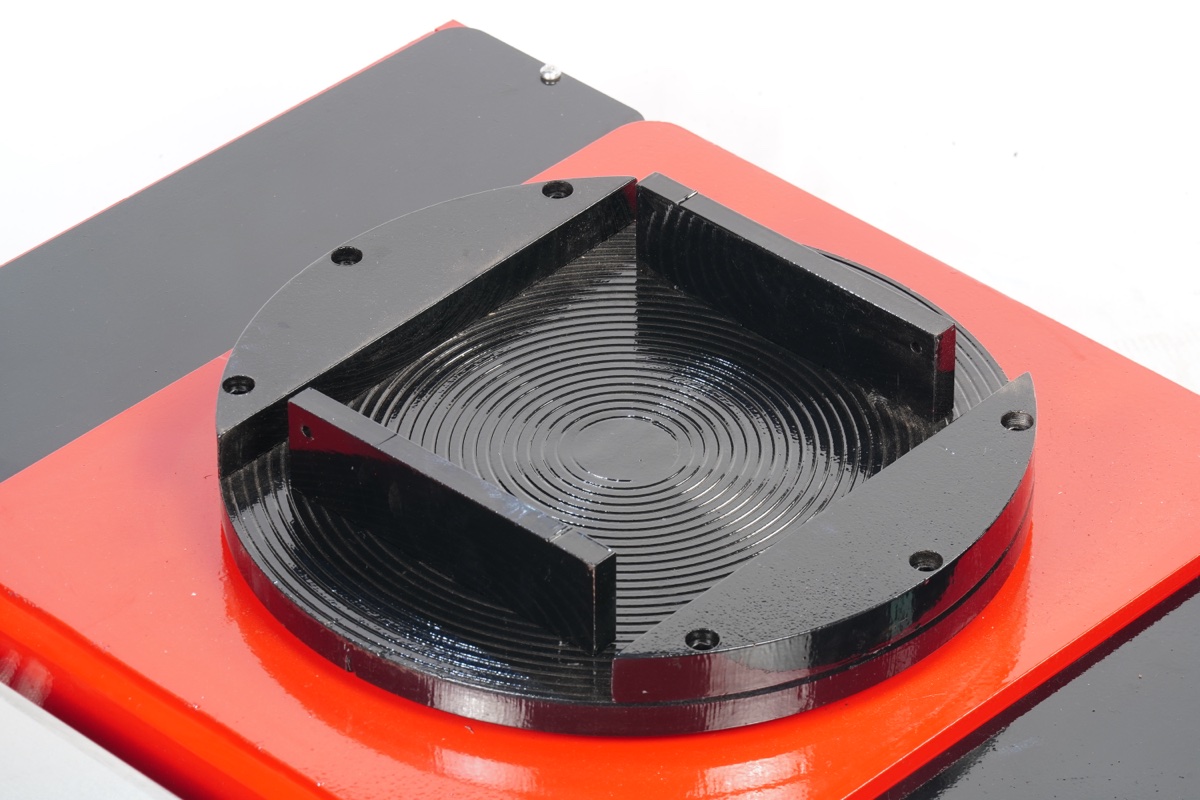
Many transfer carts feature a rotating turntable on top of the platform. This lets the operator rotate the load (for example, a steel coil or a die) without rotating the entire cart — essential when the cart needs to enter a narrow bay in one orientation but deliver the load in another.
Flat deck carts are simpler and cheaper, suitable when the load only needs to travel in a straight line without reorientation.
Engineering Detail
3. Key Components of an Electric Transfer Cart
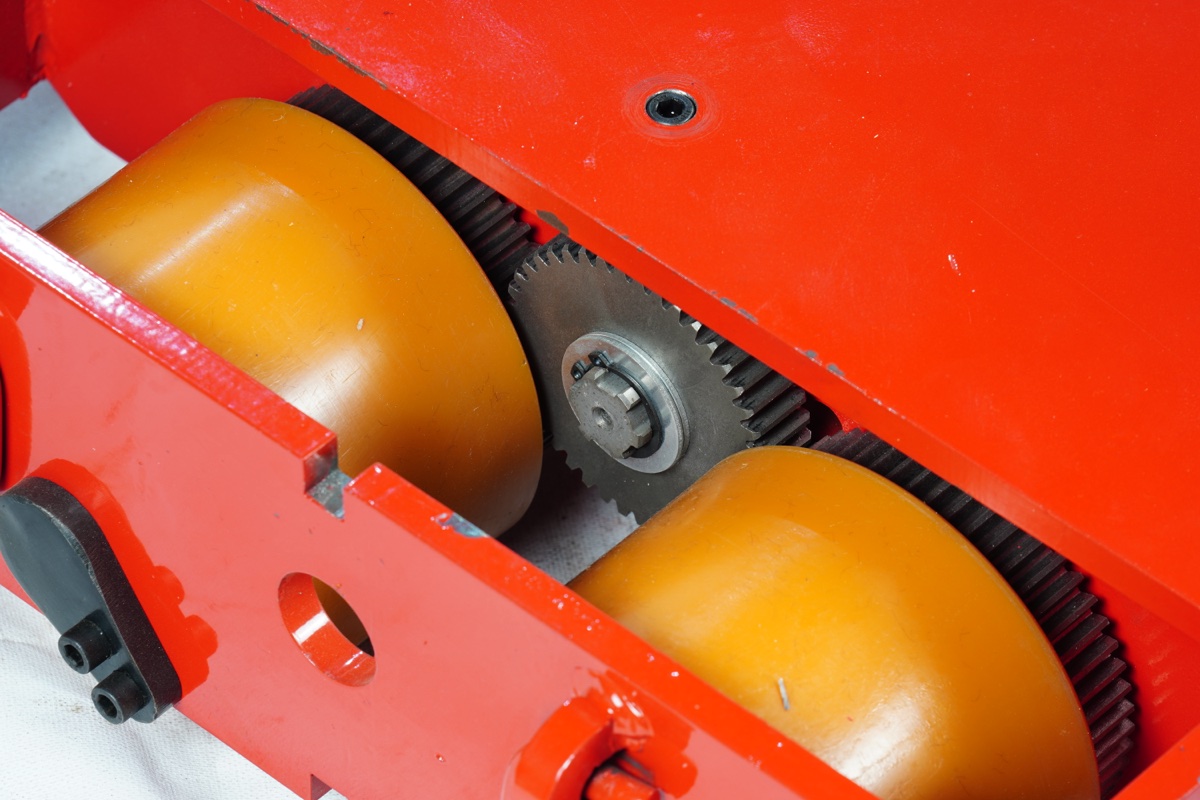
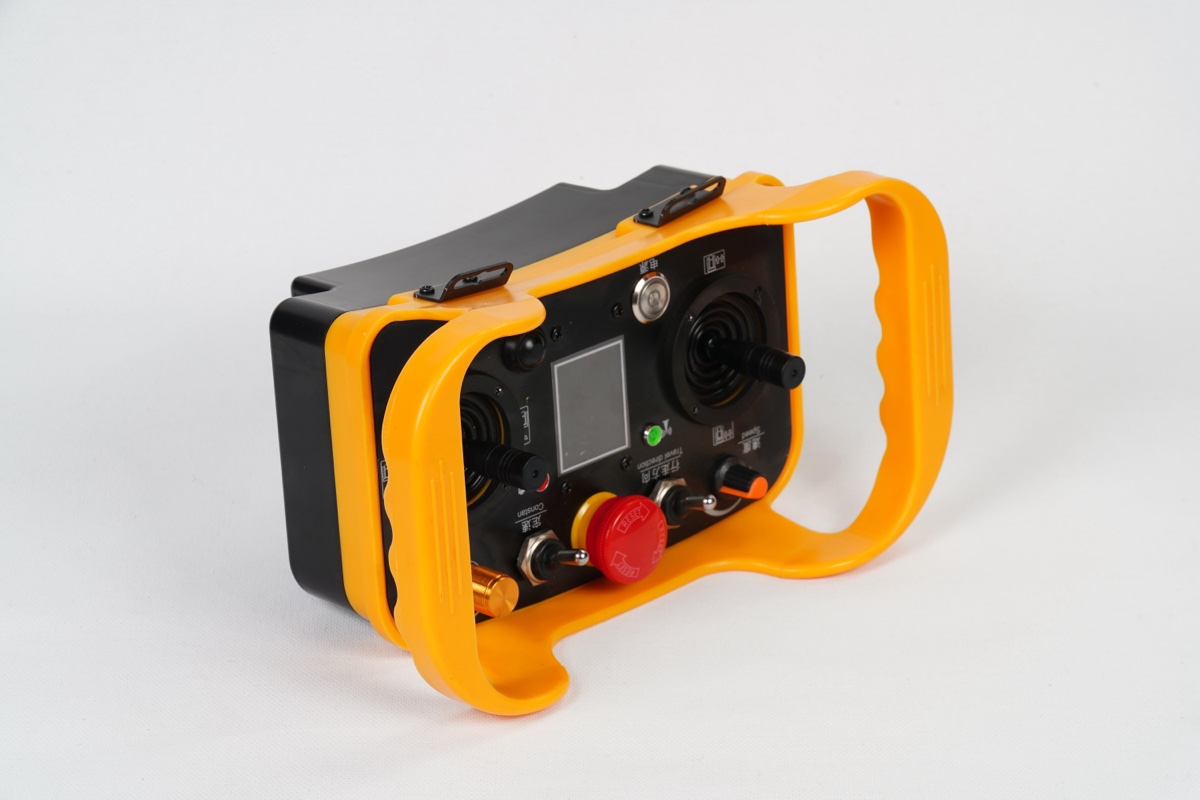
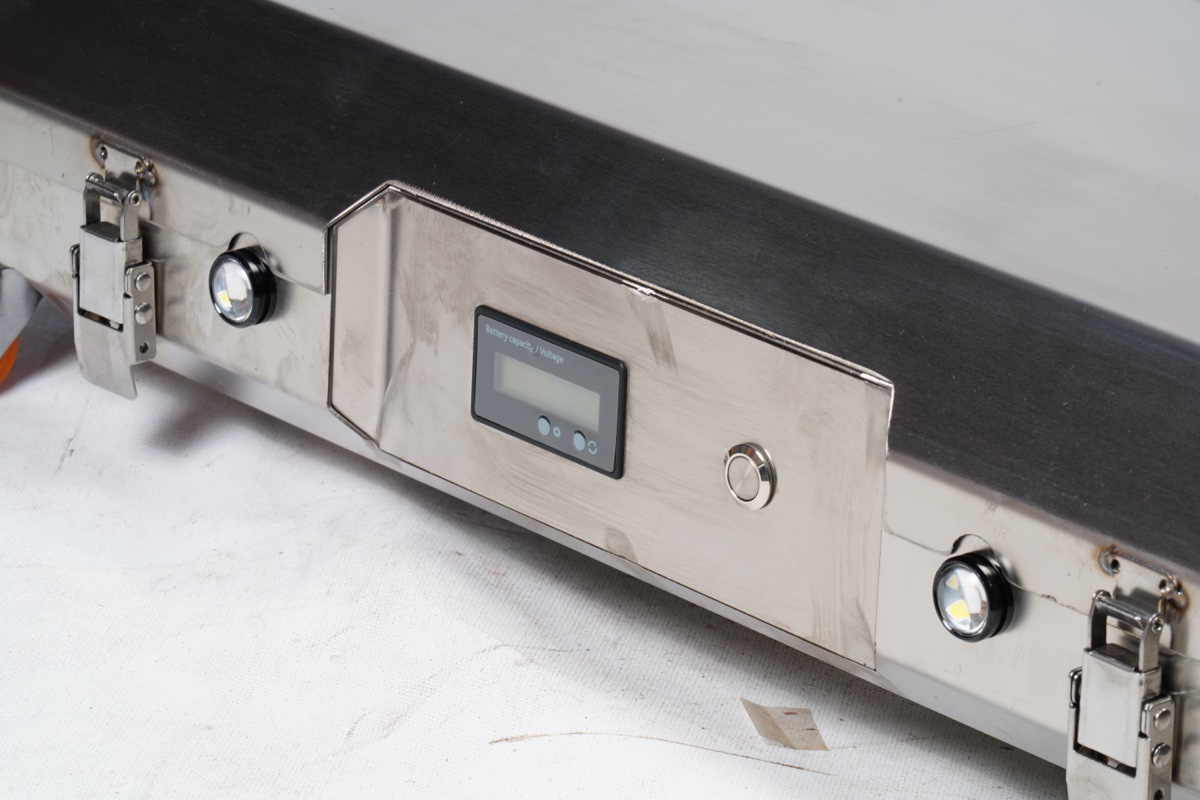
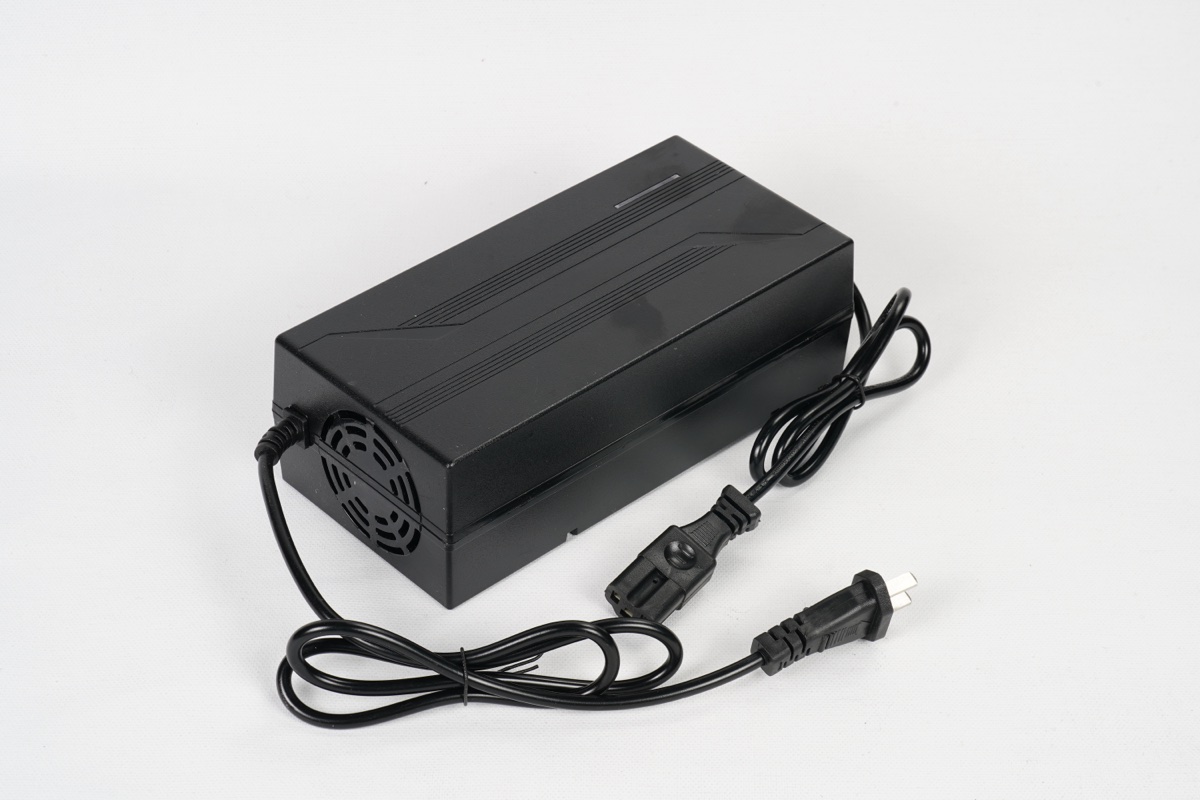
The photos below show real components from a Shenghe STC-series battery-powered transfer cart, photographed at the Cixi factory.
Drive System: Why BLDC Motors?
Modern transfer carts use brushless DC (BLDC) servo motors rather than traditional brushed DC or AC induction motors. The advantages for this application:
- Precise speed control at walking pace (0–20 m/min) — critical when inching a 40-ton die into position
- High torque at zero RPM for starting under full load on ramps or uneven floors
- No brush maintenance — motor life exceeds 20,000 hours vs 2,000–5,000 for brushed motors
- Regenerative braking recovers energy during deceleration, extending battery runtime
- Compact size fits inside a 170 mm chassis height with a brake gearbox
Shenghe’s STC series uses dual BLDC servo motors per cart (2×500W for 10T up to 2×3000W for 60T), each paired with a 104 or 120-flange brake gearbox.
Battery: Lithium vs Lead-Acid
Most new transfer carts ship with 48V lithium batteries (ternary lithium NCM or lithium iron phosphate LFP). Compared to traditional lead-acid:
- 3× cycle life (2,000+ cycles vs 500–800)
- 50% lighter for the same capacity
- Faster charging (3–5 h vs 8–12 h)
- No acid maintenance
LFP (lithium iron phosphate) is preferred for environments with high ambient temperature (foundries, steel mills) because of its superior thermal stability. NCM (ternary lithium) offers higher energy density for applications where weight matters.
Specification
4. How to Size an Electric Transfer Cart
Choosing the right transfer cart starts with five questions.
| # | Question | Why It Matters | Typical Range |
|---|---|---|---|
| 1 | What is the maximum single-load weight? | Determines the payload class and motor power. Always add a 20% safety margin. | 10–60 ton (single cart), 100–120 ton (tandem pair) |
| 2 | What are the load dimensions? | Sets the minimum platform size and turntable diameter. | Platform: 720×640 mm to 810×800 mm standard |
| 3 | What is the travel distance per trip? | Affects battery sizing. Short trips (under 50 m) can use smaller batteries; long travel paths need larger packs or rail power. | 10–200 m typical per trip |
| 4 | How many trips per shift? | Determines duty cycle and battery runtime requirements. High-frequency use may need a larger battery or opportunity charging. | 5–50 trips per 8-hour shift |
| 5 | Floor condition and slope? | Rough or sloped floors need more powerful motors and different wheel compounds. Outdoor use requires IP-rated enclosures. | Indoor smooth concrete is ideal; up to 3° slope with upgraded drive |
Standard Payload Classes
Most manufacturers offer a standard lineup with fixed payload steps. Shenghe’s STC series has 7 models:
- STC-10: 10 ton — 2×500W BLDC, 48V 60Ah, 720×640×170 mm
- STC-20: 20 ton — 2×750W BLDC, 48V 60Ah
- STC-25: 25 ton — 2×1000W BLDC, 48V 60Ah
- STC-30: 30 ton — 2×1000W BLDC, 48V 60Ah, 770×640×190 mm
- STC-40: 40 ton — 2×1500W BLDC, 48V 120Ah, 810×750×190 mm
- STC-50: 50 ton — 2×2000W BLDC, 48V 120Ah, 810×800×210 mm
- STC-60: 60 ton — 2×3000W BLDC, 48V 120Ah
For loads above 60 tons, two STC units work in tandem: STC-30+30 = 60T, STC-50+50 = 100T, STC-60+60 = 120T.
Sizing Rule of Thumb
Take your heaviest single load, add 20% safety margin, and round up to the next standard model:
Cart payload ≥ Heaviest load × 1.2
Example: Your heaviest die weighs 22 tons. 22 × 1.2 = 26.4 tons. Choose the STC-30 (30 ton) model, not the STC-25.
If you have two loads that occasionally need to travel simultaneously (e.g., stacked molds), size for the combined weight.
Use Cases
5. Applications by Industry
Steel Mills — Coil Transfer Cart
Moving steel coils (10–40 tons each) between the rolling line, storage yard and shipping dock. The turntable rotates coils for crane pickup. Carts operate in high-temperature zones near hot rolling, requiring IP-rated enclosures and heat-resistant wheel compounds.
Read full guide: Coil Transfer Cart for Steel Mills →
Hot Rolled Coil
Cold Rolled Coil
Slab Transfer
Stamping & Pressing — Die Transfer Cart
Exchanging dies between the press and the die storage area. A 500-ton press die can weigh 15–35 tons. The cart slides the die in and out of the press at floor level — faster and safer than overhead crane swaps. Die changeover time drops from hours to minutes.
Read full guide: Die Transfer Cart & Changeover Time →
Die Change
Mold Transfer
Stamping Line
Foundry & Casting — Ladle Transfer Cart
Transporting molten metal ladles and heavy castings between furnace, pouring station and cooling area. Extreme heat, metal splash and dust demand fully sealed electronics and heat-shielded battery compartments.
Ladle Handling
Casting Transport
Furnace Feed
Shipyard — Block Transfer
Moving fabricated hull sections and blocks (20–100+ tons) between workshops and the assembly dock. Long travel distances (100–500 m) and outdoor exposure require large battery packs or cable-powered configurations.
Hull Section
Block Assembly
Outdoor Yard
Heavy Machinery — Machine Base Transfer
Relocating CNC machines, turbines, generators and other heavy equipment during factory rearrangement or new installation. The low platform height (170–210 mm) lets the cart slide under equipment that is already resting on low stands.
CNC Machine
Generator
Factory Layout
Automotive — Assembly Line Feed
Feeding body-in-white, engine blocks and transmission assemblies between production stations. Precise speed control and programmable stop positions are critical. Many automotive plants upgrade from rail carts to trackless battery carts for layout flexibility.
Body Transfer
Engine Line
AGV Upgrade
Comparison
6. Battery-Powered vs Rail-Powered Transfer Cart
| Factor | Battery-Powered (Trackless) | Rail-Powered (Busbar) |
|---|---|---|
| Routing | Flexible — any flat surface, can change path anytime | Fixed — follows embedded rails only |
| Installation cost | Low — no civil work, just charge the battery and go | High — rail installation, trenching, conductor bar |
| Runtime | Limited by battery (~3 h per charge) | Unlimited — continuous power from rails |
| Payload sweet spot | 5–60 ton (single), up to 120 ton (tandem) | 20–500+ ton |
| Maintenance | Battery replacement every 3–5 years, wheel replacement annually | Rail and conductor bar maintenance, wheel replacement |
| Floor requirement | Smooth, level concrete (≤3° slope) | Steel rails with gauge tolerance |
| Safety | No exposed electrical conductors on floor | Rail voltage on floor (requires safety barriers) |
| Layout flexibility | High — reroute instantly | None — path is fixed by rails |
| Outdoor use | Yes, with IP-rated enclosure | Yes, with weather-protected conductor system |
| Best for | Most workshops, variable routing, medium duty cycle | Fixed-path heavy duty, 24/7 continuous operation |
Operations
7. Maintenance & Safety
Maintenance Schedule
- Daily: Visual inspection, check battery level on dashboard, verify emergency stop function
- Weekly: Clean wheels and chassis of debris, check for unusual vibration or noise
- Monthly: Lubricate bearings and gear mechanism, inspect wire connections for corrosion
- Quarterly: Test battery cell balance, check motor temperature rise under load, inspect remote control pairing
- Annually: Replace polyurethane drive wheels (wear parts), full electrical system inspection, recalibrate controller if needed
Safety Best Practices
- Load centering: Always center the load on the turntable or platform. Off-center loads cause uneven wheel wear and tipping risk.
- Speed in turns: Reduce speed before turning, especially with tall or top-heavy loads.
- Floor condition: Remove debris, oil spills and loose objects from the travel path. Uneven joints or potholes damage wheels.
- Emergency stop: Ensure all operators know the location and function of the e-stop button on the remote.
- No riding: Transfer carts are not designed for personnel transport. Operators should walk alongside or stand clear during movement.
- Charging area: Charge in a ventilated area away from flammable materials. Lithium chargers include overcharge protection but good practice still applies.
FAQ
8. Frequently Asked Questions
What is an electric transfer cart?
An electric transfer cart is a battery-powered or rail-powered low-profile vehicle used to move heavy loads — typically 5 to 120+ tons — across short distances inside factories, warehouses and yards. Unlike forklifts, the load sits directly on the cart platform rather than being lifted on forks, making transfer carts safer and more practical for oversized or extremely heavy items like steel coils, dies, molds and machine bases.
How much weight can an electric transfer cart carry?
Single-unit electric transfer carts typically range from 5 tons to 60 tons payload capacity. For heavier loads, two carts can operate in tandem (front and rear, synchronized by wireless control) to reach 100 tons or even 120+ tons combined. Standard models from manufacturers like Shenghe cover 10, 20, 25, 30, 40, 50 and 60 ton classes.
Battery-powered vs rail-powered transfer cart — which is better?
Battery-powered (trackless) transfer carts offer flexible routing, no floor infrastructure cost and easier installation — ideal for workshops that rearrange layouts. Rail-powered carts draw power from embedded rails, enabling unlimited runtime and higher sustained loads, but require fixed tracks and civil work. For most modern plants, battery-powered carts are preferred because they offer route flexibility and lower installation cost.
How long does a battery-powered transfer cart run per charge?
A typical 48V lithium battery pack (60Ah to 120Ah) provides approximately 3 hours of continuous operation under rated load. Actual runtime depends on load weight, travel distance, floor surface and duty cycle. Charging time is usually 3–5 hours with a standard charger. For plants needing continuous 24/7 operation, swappable battery packs or opportunity charging stations are available.
What industries use electric transfer carts?
Electric transfer carts are widely used in steel mills (coil and slab handling), automotive stamping plants (die and mold transfer), foundries and casting plants (ladle and mold transport), shipyards (block and section movement), heavy machinery manufacturing (machine base relocation), aerospace (fuselage section transfer), and warehouse logistics (heavy pallet or container movement).
What maintenance does an electric transfer cart need?
Regular maintenance includes: daily visual inspection and battery level check, weekly cleaning of wheels and chassis, monthly lubrication of bearings and gear mechanisms, quarterly inspection of electrical connections and battery health, and annual replacement of polyurethane drive wheels (wear parts). BLDC-driven carts have lower maintenance than brushed-motor models because BLDC motors have no brushes to replace.
Can two transfer carts work together for heavier loads?
Yes. Tandem pairing synchronizes two carts (front and rear under the same load) via wireless control. The operator uses a single remote to command both carts simultaneously. Common tandem configurations: STC-30+30 = 60 ton, STC-50+50 = 100 ton, STC-60+60 = 120 ton. This approach is more economical than building a single 100-ton cart.
What is the lead time for an electric transfer cart?
Standard configurations (stock models STC-10 through STC-60) typically ship within 5 working days from Shenghe’s China factory. Custom OEM builds — extended platform, special turntable diameter, IP-rated enclosure, navigation upgrade — take 4–6 weeks. Sea freight to Europe, North America or the Middle East adds 25–40 days.
Related Reading
Need a Transfer Cart for Your Plant?
Tell us the load weight, dimensions, travel distance and environment — and we’ll recommend the right model with a budgetary quote. Standard models ship in 5 days.
Get a Quote WhatsApp