Industry Guide — Steel Mills

Coil Transfer Cart for Steel Mills: Selection & Sizing Guide

A coil transfer cart is a heavy-duty electric platform with a V-shaped coil cradle (saddle) that moves steel coils — typically 10 to 60 tons each — between the rolling line, coil storage yard, processing stations and shipping dock. Coil carts replace overhead cranes for horizontal transport, reducing coil handling time, eliminating suspended-load risk, and preventing the surface damage that crane hooks and slings cause on high-grade coil products.

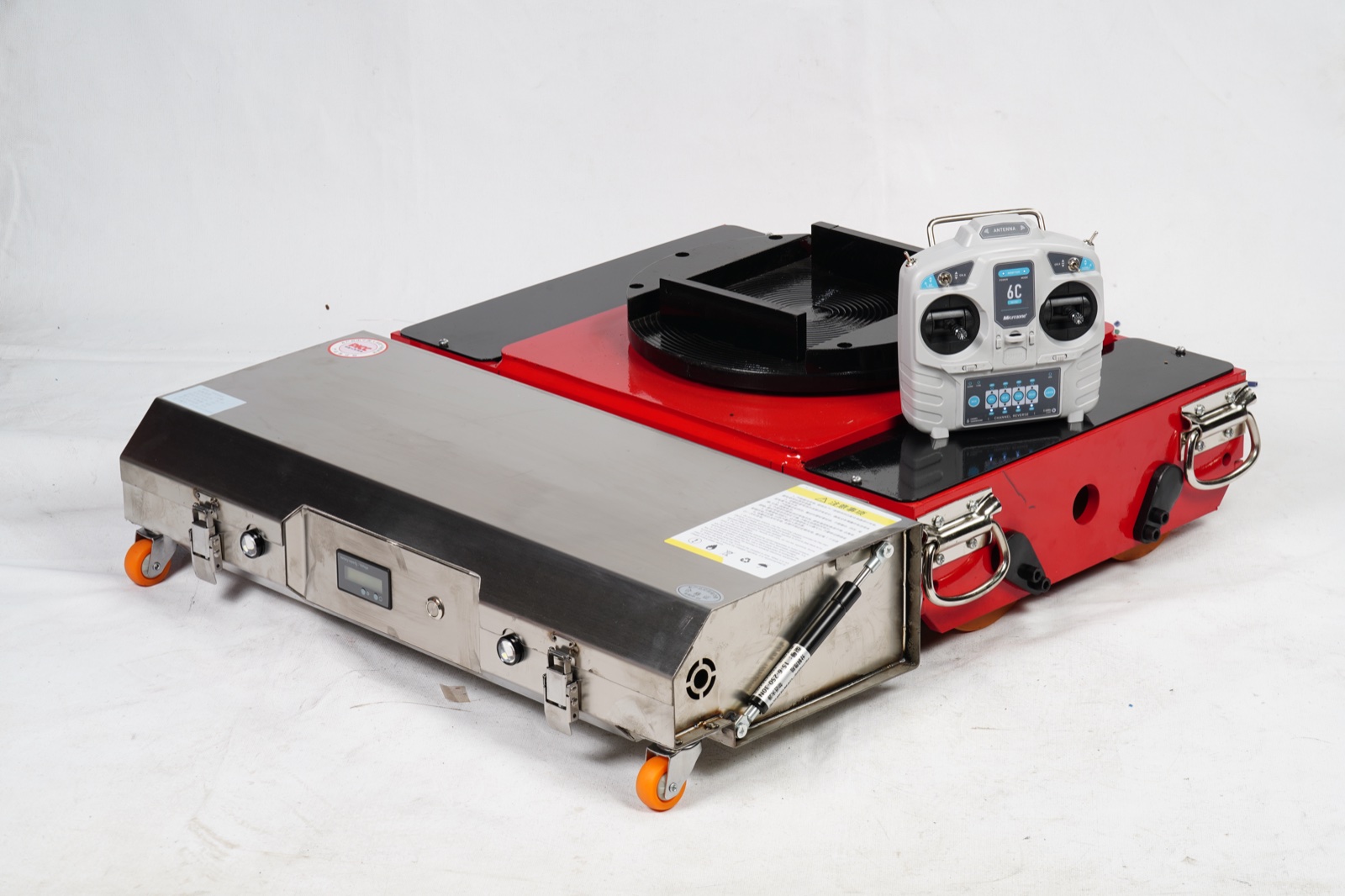
Battery-powered coil transfer cart with low-profile chassis, rotating turntable for coil reorientation, and industrial wireless remote — 10 to 60 ton payload
Shenghe STC-series transfer cart platform — in coil handling configuration, a V-shaped coil saddle is mounted on the turntable to cradle the steel coil during transport. The turntable rotates the coil for crane pickup alignment at the destination.
The Challenge

Why Steel Mills Need Dedicated Coil Transfer Carts

Steel coils are among the most difficult loads in industrial material handling:

  • They roll. A 25-ton cylinder on a flat surface is a runaway hazard. Coil carts solve this with a V-shaped cradle that locks the coil in place.
  • They’re hot. Hot rolled coils exit the rolling line at 200–600°C surface temperature. Standard handling equipment isn’t designed for this heat.
  • They’re surface-sensitive. Crane hooks, slings and C-hooks leave marks on the outer wrap. For automotive-grade cold rolled and galvanized coils, surface defects mean rejection and reprocessing.
  • They move in high volume. A modern hot strip mill produces 200–500 coils per day. Each coil needs 2–4 handling moves (rolling line → cooling → inspection → storage → shipping).

Overhead cranes handle vertical lifts (onto and off the cart), but horizontal transport across the plant is where coil transfer carts save time, labor and surface quality.
Coil Cart vs Crane-Only Handling

  • Speed: Cart delivers coils 3–5× faster than crane transport for distances over 30 m
  • Surface protection: Cradle support eliminates hook marks and sling scratches
  • Safety: No suspended 30-ton coil over workers' heads
  • Crane freedom: Crane is freed for vertical lifts while cart handles horizontal moves
  • Labor: One operator with wireless remote vs crane operator + rigger team
  • Throughput: Multiple carts can operate simultaneously; only one crane per bay
Reference Data

How Heavy Are Steel Coils?

Coil weight determines the cart payload class. Below are typical ranges by product type.

Coil Type Typical Width Typical Weight Range Max Coil OD Recommended Cart
Hot rolled (HR) 900–1850 mm 10–35 ton ≤2100 mm STC-20 to STC-40
Heavy gauge HR 1200–2100 mm 30–50 ton ≤2200 mm STC-40 to STC-60
Cold rolled (CR) 600–1500 mm 5–25 ton ≤1800 mm STC-10 to STC-30
Galvanized (GI/GL) 600–1500 mm 5–20 ton ≤1800 mm STC-10 to STC-25
Stainless steel 600–1500 mm 5–15 ton ≤1600 mm STC-10 to STC-20
Silicon steel (electrical) 800–1300 mm 5–15 ton ≤1500 mm STC-10 to STC-20
Aluminum coil 600–2000 mm 3–12 ton ≤1800 mm STC-10

Sizing rule: cart payload ≥ heaviest coil weight × 1.2. For coils exceeding 50 tons, use tandem pairs: STC-30+30 = 60T, STC-50+50 = 100T, STC-60+60 = 120T.

Critical Component

Coil Saddle (Cradle) Design

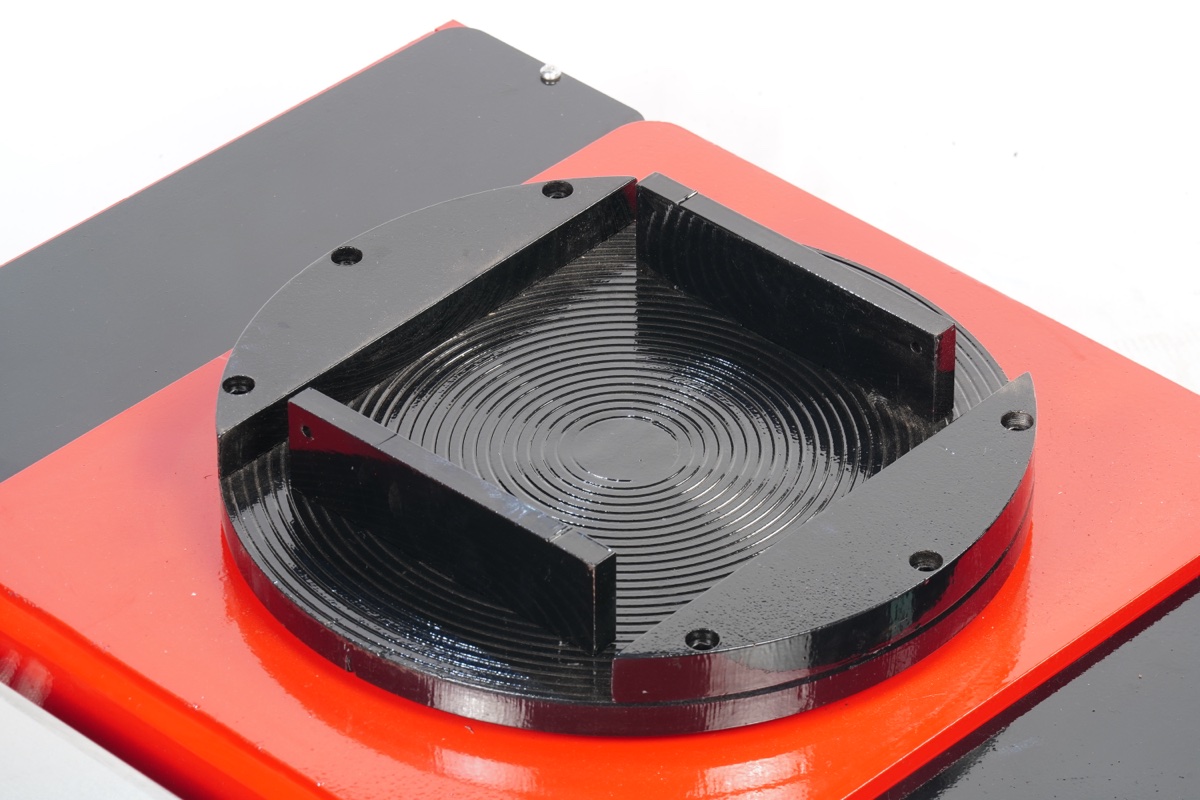
CNC-machined rotating turntable on coil transfer cart — the coil saddle mounts on this turntable for coil reorientation
The coil saddle (V-block) mounts on this rotating turntable. The turntable rotates the coil for crane pickup alignment without moving the entire cart.

What the Coil Saddle Does

The coil saddle is the interface between the cart and the steel coil. It must:

  • Prevent rolling: V-shape (typically 90–120° included angle) cradles the coil securely. The saddle width must accommodate the range of coil ODs the cart will handle.
  • Protect the surface: Contact pads on the saddle arms are lined with rubber, polyurethane, or hardened steel (for hot coils). For automotive-grade cold rolled coils, soft pads prevent outer-wrap marking.
  • Adjust for coil diameter: Some saddles are adjustable (sliding arms or interchangeable inserts) to handle multiple coil OD ranges. Fixed saddles are simpler but limit flexibility.
  • Handle eye-to-sky or eye-to-side: Coils travel either with the coil axis vertical (“eye-to-sky”) or horizontal (“eye-to-side”). Saddle geometry differs for each orientation.

Saddle Material Options

  • Rubber-padded steel: Standard for cold rolled and galvanized — protects coil surface
  • Hardened steel: For hot rolled coils — withstands heat, no rubber to melt
  • Polyurethane-lined: Premium option for stainless steel and automotive grades
  • Ceramic-shielded: For hot coils above 400°C surface temperature
High Temperature

Handling Hot Rolled Coils: Heat-Resistant Upgrades

Hot rolled coils exit the coiling station at 200–600°C. A standard transfer cart rated for ambient temperature will fail quickly in this environment. The key upgrades for hot coil service:

  • Heat shield: A ceramic fiber or calcium silicate insulation board between the coil saddle and the cart platform. This prevents heat from conducting into the battery, motors and electronics below. Minimum 50 mm thickness for coils above 300°C.
  • Steel wheels: Standard polyurethane wheels soften above 80°C. Hot coil carts use hardened steel or cast iron wheels, accepting higher floor wear as the tradeoff for heat resistance.
  • IP65 electronics enclosure: Sealed stainless steel cabinet with forced-air ventilation or heat exchanger to keep controller and battery below 45°C even when the cart platform is at 200°C+.
  • High-temp wiring: Silicone-insulated or Teflon-coated cables rated for 200°C+ continuous. Standard PVC insulation degrades above 70°C.
  • LFP battery: Lithium iron phosphate chemistry is strongly preferred over NCM (ternary lithium) in hot environments due to superior thermal stability. LFP cells tolerate up to 60°C ambient without derating.
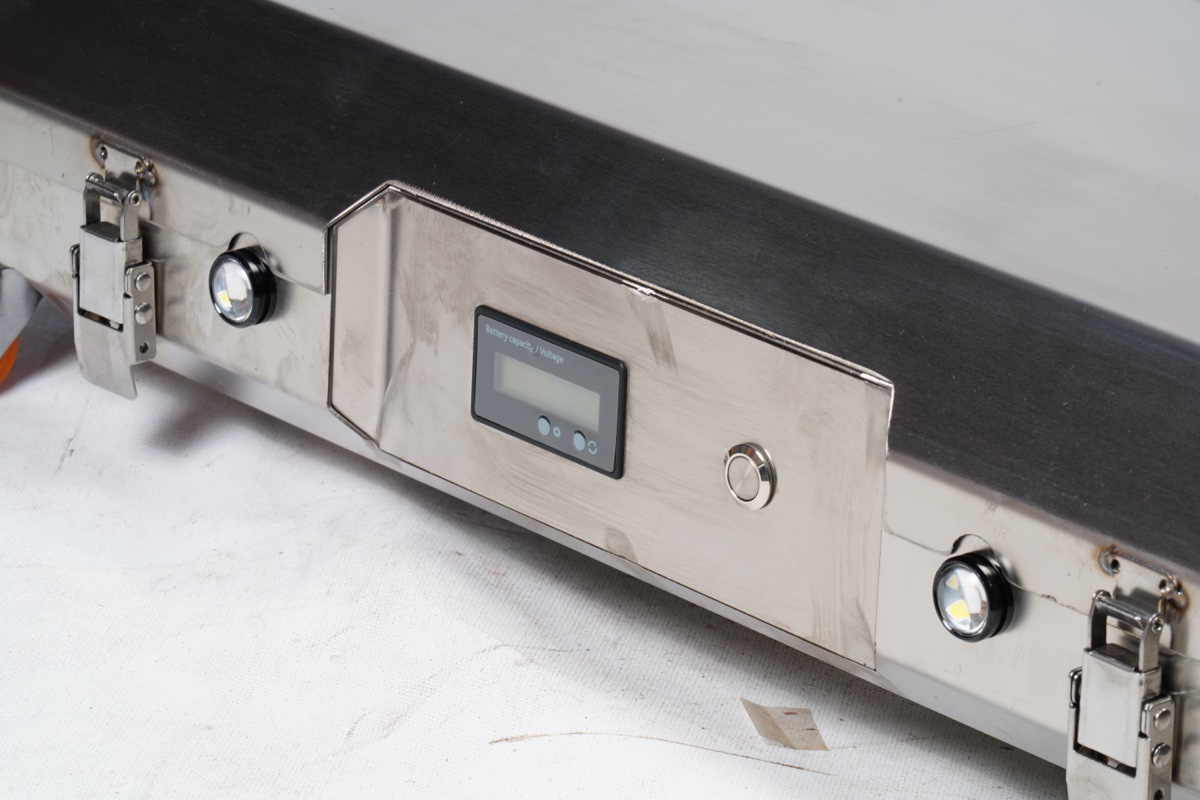
Sealed stainless steel electronics enclosure on coil transfer cart — protects battery monitor and controller from heat and mill dust
Stainless steel electronics enclosure with LED indicators and battery monitor. For hot coil service, this enclosure is upgraded to IP65 with forced ventilation.

Temperature Zones

  • < 80°C coil surface: Standard cart, PU wheels, standard wiring
  • 80–200°C: Heat shield, high-temp PU or steel wheels, silicone wiring
  • 200–400°C: Full heat shield, steel wheels, IP65 enclosure, LFP battery, forced ventilation
  • > 400°C: Ceramic shield, all-steel wheels, water-cooled or physically separated electronics, consider rail power to keep battery away from heat zone
Workflows

Coil Transfer Cart Workflows in a Steel Mill

1. Hot Rolling Line → Cooling Yard

Coil exits the coiling station at 300–500°C. Crane places the coil eye-to-sky onto the cart’s heat-shielded saddle. Cart transports the coil 50–200 m to the cooling yard. Turntable rotates the coil for correct row alignment. Crane lifts the coil off onto the cooling stand.

Cycle time: 5–8 min per coil (vs 15–25 min crane-only)

2. Cooling Yard → Inspection Bay

After cooling to ambient (8–24 hours), coils are moved to the quality inspection bay. Cart carries the coil to the inspection station where the outer wrap is examined, dimensions measured and samples cut. No heat-resistant upgrades needed at this stage.

Cycle time: 3–5 min per coil

3. Storage → Processing Line

Coils move from storage to downstream processing: pickling, cold rolling, annealing, galvanizing or slitting lines. Cart delivers the coil to the line’s entry coil car or uncoiler. Turntable aligns the coil tail for correct threading direction.

Cycle time: 3–10 min depending on distance

4. Finished Coil → Shipping Dock

Packed and banded coils move from the packaging station to the shipping dock for truck or rail car loading. Multiple carts can shuttle coils simultaneously, staging them at the dock in loading sequence. This is the highest-volume, most repetitive workflow — battery runtime and charging logistics are critical.

Cycle time: 5–15 min per coil (long distances)

Power Source

Battery vs Rail Power for Steel Mill Coil Carts

Factor Battery-Powered (Trackless) Rail-Powered (Busbar)
Best mill applicationCooling yard → storage, storage → processing, shipping dock shuttleRolling line exit → cooling yard (fixed path, 24/7)
Hot coil suitabilityGood with heat upgrades, but battery needs protection from radiant heatExcellent — power source is remote from heat zone
Runtime per shift~3 h continuous (48V 120Ah LFP). Opportunity charging during crane load/unload.Unlimited
InstallationNone — charge and deployRail installation: $30,000–$100,000+ depending on distance and environment
Routing flexibilityHigh — serve multiple bays, reroute for maintenance shutdownsFixed path only
Floor conditionRequires smooth, level concreteSteel rails with gauge tolerance
Mill dust and scaleWheels can accumulate mill scale — daily cleaning neededRails need scale clearing — can jam wheels
Recommended forMills with variable routing, multiple destinations, or new/renovated plantsEstablished mills with fixed coil flow, 24/7 rolling

Hybrid Approach

Many modern steel mills use both types: rail-powered carts on the fixed hot-end path (rolling line to cooling yard) and battery-powered carts for everything else (cooling yard to storage, storage to processing, shipping dock). This combines unlimited runtime where it matters most with routing flexibility everywhere else.

Opportunity Charging

Battery-powered coil carts spend 3–5 minutes at each end of a trip being loaded/unloaded by crane. Smart plants install opportunity charging pads at these waiting points — the cart charges during every crane cycle, extending effective runtime to a full shift without dedicated charging breaks.

Heavy Loads

Tandem Pairing for Coils Over 50 Tons

Some hot strip mills produce coils that exceed 40–50 tons (wide, thick gauge, large OD). Rather than building a single massive cart, the standard approach is tandem pairing — two carts synchronized by wireless control, positioned front and rear under the same coil.

How Tandem Works

  • Two STC carts are paired at the factory — their controllers are pre-synchronized
  • The operator uses a single wireless remote to command both carts simultaneously
  • Both carts accelerate, decelerate and stop in sync — the coil never experiences differential movement
  • Each cart carries approximately half the coil weight

Tandem Configurations

  • STC-30 + STC-30: 60 ton combined payload
  • STC-50 + STC-50: 100 ton combined payload
  • STC-60 + STC-60: 120 ton combined payload

Why Tandem Beats Single Large Cart

  • Cost: Two 50T carts cost less than one custom 100T cart
  • Flexibility: Each cart can operate independently for lighter coils
  • Redundancy: If one cart is in maintenance, the other still handles lighter loads
  • Floor loading: Weight distributed over 8 wheels instead of 4, reducing floor pressure
  • Logistics: Standard-size carts are easier to ship and fit through doorways
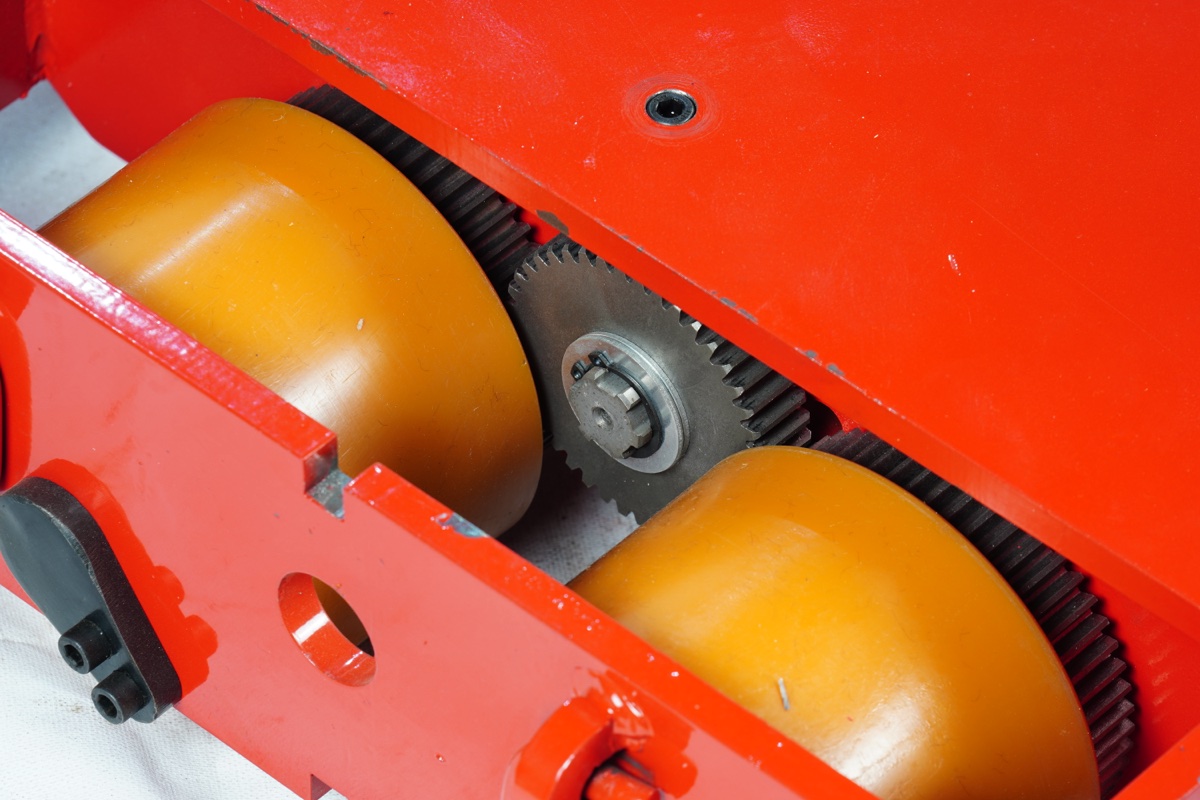
Drive wheel assembly inside coil transfer cart — dual polyurethane wheels with steel gear drive for heavy coil loads
Drive wheel assembly — each cart has 4 driven wheels. In tandem mode, 8 wheels share the coil weight, reducing floor contact pressure.
Environment

Steel Mill Environment: What Your Cart Must Survive

Mill Scale & Dust

Iron oxide scale flakes off coils and accumulates on floors, wheels and chassis. Daily wheel cleaning is essential. Sealed bearings and enclosed gear drives prevent scale infiltration into the drivetrain.

Water & Coolant

Descaling sprays, cooling water and hydraulic oil create puddles on the mill floor. IP65-rated electronics and sealed battery compartments are mandatory. Stainless steel enclosures resist corrosion from water + scale slurry.

Radiant Heat

Even when not carrying a hot coil, carts operating near the hot end are exposed to radiant heat from nearby coils, slabs and the rolling line itself. Battery temperature monitoring with automatic shutdown above 55°C is a baseline safety feature.

Electromagnetic Interference

Arc furnaces, high-power drives and large motors in a steel mill generate strong electromagnetic fields. Industrial-grade wireless remote controls with frequency hopping and error correction are essential — consumer-grade RC systems will suffer interference and dropouts.

FAQ

Frequently Asked Questions

What is a coil transfer cart?

A coil transfer cart is a heavy-duty motorized platform designed specifically for moving steel coils inside a mill or between production bays. It features a V-shaped or U-shaped coil cradle (saddle) on top that secures the coil during transport, preventing rolling. Typical payloads range from 10 to 60 tons per cart, or up to 120 tons in tandem pairs.

Can a coil transfer cart handle hot rolled coils?

Yes, but the cart needs heat-resistant upgrades. Hot rolled coils exit the rolling line at 200–600°C surface temperature. Upgrades include: ceramic or asbestos-free heat shield between cradle and platform, heat-resistant or steel wheels, IP65-rated electronics with forced ventilation, high-temperature wiring, and LFP (lithium iron phosphate) battery for thermal stability.

How heavy are steel coils?

Hot rolled coils typically weigh 10–35 tons (up to 1850 mm width), heavy gauge HR coils can reach 50 tons, cold rolled coils weigh 5–25 tons, galvanized coils 5–20 tons, and stainless steel coils 5–15 tons. Aluminum coils are lighter at 3–12 tons.

Battery-powered or rail-powered coil cart — which is better for a steel mill?

For fixed-path transport from rolling line to cooling yard (24/7 operation), rail-powered carts offer unlimited runtime. For flexible routing across multiple bays, storage reorganization, or facilities without rails, battery-powered trackless carts are better. Many mills use both: rail on the hot end, battery everywhere else.

What is a coil saddle (cradle)?

A coil saddle is a V-shaped or U-shaped support on the cart platform that cradles the steel coil and prevents rolling during transport. The V-angle is typically 90–120 degrees. Contact surfaces are lined with rubber (for cold rolled), hardened steel (for hot rolled), or polyurethane (for stainless and automotive grades).

Can two coil carts carry one extra-heavy coil?

Yes. Tandem pairing synchronizes two carts via wireless control — the operator uses a single remote. Standard configurations: STC-30+30 = 60T, STC-50+50 = 100T, STC-60+60 = 120T combined payload. Each cart can also operate independently for lighter coils.

Need a Coil Transfer Cart?

Tell us your coil weight range, coil OD, travel distance, whether you handle hot coils, and we’ll recommend the right model with a budgetary quote. Standard models ship in 5 working days; heat-resistant builds in 4–6 weeks.

Get a Quote WhatsApp